jingzhang
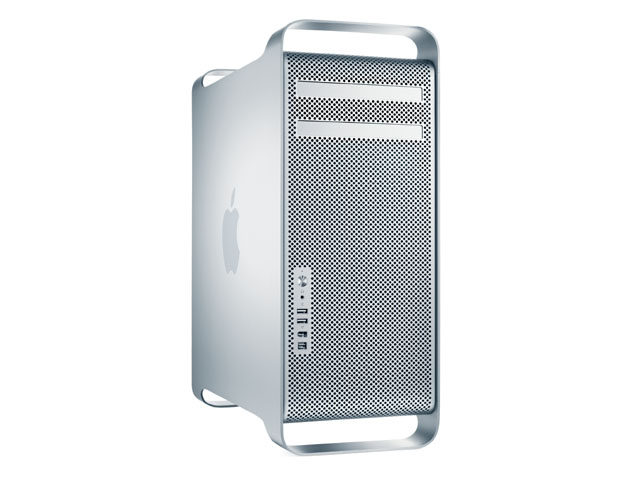
According to the latest report by Mark Gurman from Bloomberg, Apple has essentially abandoned this product line. The planned M4 Ultra chip, originally intended for it, has been canceled, and the development of the new Mac Pro has been put on hold. Internally at Apple, it is even regarded as a “low-priority” project.
The once-iconic tower workstation, symbolizing ultimate professional capabilities, is quietly fading from Apple’s core focus. However, this is not a dramatic turn of events but rather the result of long-term deliberation. Since its form update in 2019, the Mac Pro has struggled to find a new position in the Apple Silicon era and is visibly being replaced by the smaller, more integrated Mac Studio product line.
But what truly matters is not Apple’s attitude towards the Mac Pro itself but rather the larger industry trend it reveals: traditional “workstations” are being redefined.
Especially when a System-on-Chip (SoC) becomes powerful and versatile enough, the rationale for traditional tower PCs begins to weaken. In March this year, Apple released the latest Mac Studio equipped with M4 Max and M3 Ultra chips, which can even run large models with over 600 billion parameters locally (the maximum parameter count of DeepSeek R1 is 671 billion).
Meanwhile, the most radical change in the Windows PC industry this year also comes from highly integrated SoCs. AMD’s Ryzen AI Max+ 395, unveiled at CES 2025 earlier this year, is a prime example: featuring a 16-core Zen5 CPU, an RDNA3+ GPU capable of competing with mid-range discrete graphics cards, and a 50 TOPS NPU capable of running local small models, all integrated into a single chip.
In fact, this was also a key aspect of NVIDIA’s original plan for PC chips. However, in September this year, NVIDIA “chose” to give Intel a helping hand. In addition to Intel customizing x86 processors for NVIDIA in the data center sector, Intel will also introduce x86 SoCs integrating NVIDIA RTX GPU chiplets (Chiplet) for the consumer computing market.
All these developments are destined to reshape the PC landscape and our perceptions of it.
Separate market sentiment from product execution
Price movement and social attention can react instantly, while technology deployment takes longer. A useful analysis asks what operational milestone would prove that the story has changed real behavior.
That milestone might be production use, a measurable cost change, a regulatory approval or sustained customer demand rather than one day of market volatility.
Identify the assumptions behind the forecast
Every long-term scenario depends on assumptions about adoption, competition, capacity and policy. Making those assumptions explicit helps readers understand what evidence would cause the outlook to improve or weaken.
How to interpret the development beyond the headline
Fast-moving technology and crypto stories should separate confirmed facts from forecasts, market reaction and interpretation. Product launch, adoption, liquidity, regulation and execution can all determine whether an early headline becomes a durable shift.
The useful follow-up is concrete evidence: shipped capability, user growth, audited transactions, financial guidance or regulatory decisions that confirm or weaken the initial narrative.
Watch second-order effects
Major developments can change incentives for developers, creators, exchanges, infrastructure providers and users. The practical impact may appear through costs, standards, distribution or policy rather than through the headline event itself.
Keeping long-term scenarios conditional makes later updates easier to interpret without rewriting early speculation as fact.
Practical implementation check
Before adopting the mechanism described above, define the exact business rule, who controls it and what evidence will show that it worked. Test the failure path as carefully as the successful path, especially when rights, payments or wallet actions are involved.
The final system should also document versioning, rollback and the assumptions that may become stale over time. That turns a one-off experiment into an operating model that creators, users and developers can understand.


 admin