jingzhang
Anonymous Reviewer Exposes Flaws in Peer Process
An anonymous AAAI 2026 peer reviewer’s viral Reddit post has ignited fierce debate over academic integrity, describing the review process as “the most chaotic” they’ve encountered. Strong papers were rejected, weak ones advanced, and suspected “relationship papers” sailed through—a system seemingly undermined by bias and inconsistency.
AI’s Growing Role Raises Concerns
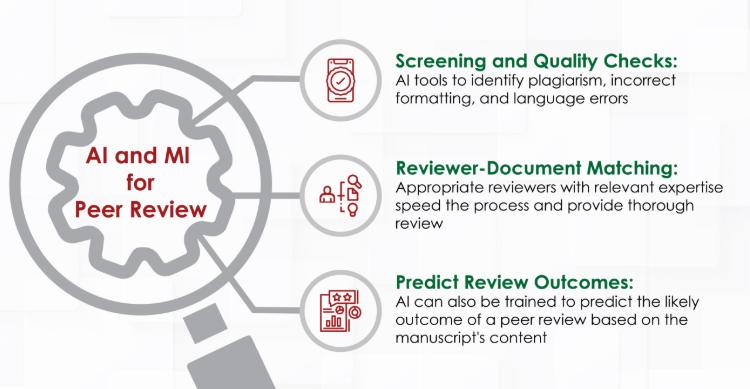
Adding to the controversy: AI now summarizes detailed reviewer critiques for Area Chairs (ACs), who often rely on these summaries to make final decisions. While AAAI 2026 claims AI is “only assistive,” reviewers worry its influence skews outcomes, turning peer review into a “summary bias” game. One Redditor bluntly stated, “Human judgment is being quietly replaced.”
Systemic Issues Surface
The reviewer highlighted systemic flaws: Phase 1 reviewers hold veto power, Phase 2 lacks context leading to inconsistent scores, and the official two-phase process feels like an “experiment in algorithmic governance.” Comments flooded in, with researchers sharing similar experiences and questioning the field’s future. “I’m quitting this field. I just can’t do it anymore,” one wrote.
Core Question: Can Fairness Survive?
The incident isn’t just about one conference—it reflects broader anxieties about AI’s role in academia. As algorithms summarize human judgment, the community faces an uncomfortable truth: If AI-generated summaries outweigh expert analysis, what remains of peer review? The reviewer’s closing line summed it up: “If this paper gets accepted, I might never review for AAAI again.” A sign not just of lost faith in a process, but in the trust that underpins it.
How to interpret the development beyond the headline
Fast-moving technology and crypto stories should separate confirmed facts from forecasts, market reaction and interpretation. Product launch, adoption, liquidity, regulation and execution can all determine whether an early headline becomes a durable shift.
The useful follow-up is concrete evidence: shipped capability, user growth, audited transactions, financial guidance or regulatory decisions that confirm or weaken the initial narrative.
Watch second-order effects
Major developments can change incentives for developers, creators, exchanges, infrastructure providers and users. The practical impact may appear through costs, standards, distribution or policy rather than through the headline event itself.
Keeping long-term scenarios conditional makes later updates easier to interpret without rewriting early speculation as fact.
Separate market sentiment from product execution
Price movement and social attention can react instantly, while technology deployment takes longer. A useful analysis asks what operational milestone would prove that the story has changed real behavior.
That milestone might be production use, a measurable cost change, a regulatory approval or sustained customer demand rather than one day of market volatility.
Identify the assumptions behind the forecast
Every long-term scenario depends on assumptions about adoption, competition, capacity and policy. Making those assumptions explicit helps readers understand what evidence would cause the outlook to improve or weaken.
Practical implementation check
Before adopting the mechanism described above, define the exact business rule, who controls it and what evidence will show that it worked. Test the failure path as carefully as the successful path, especially when rights, payments or wallet actions are involved.
The final system should also document versioning, rollback and the assumptions that may become stale over time. That turns a one-off experiment into an operating model that creators, users and developers can understand.
How to evaluate the idea in practice
The most useful next step is to define the concrete decision this mechanism is supposed to improve. Identify the actor, asset, permission or payment state involved, then specify what evidence would prove that the workflow worked as intended. This keeps a Web3 or AI concept connected to an operational problem rather than becoming infrastructure for its own sake.
Teams should also test the negative path: expired authority, conflicting rights, failed settlement, unavailable networks or a user who wants to revoke access. Recovery and auditability are part of the product value.
What to watch as the system scales
As more creators, fans and platforms participate, edge cases become normal. Version rules, preserve provenance and expose human-readable status so operators do not have to interpret raw chain or policy data to understand what happened.
Success should be measured with repeat usage, dispute rate, creator earnings and operational cost together, not by transaction volume alone.
Keep machine rules understandable to people
Even when permissions, settlement or provenance are encoded in software, creators and users still need plain-language explanations of what is active, what can change and what happens when a rule expires. Human understanding and machine enforcement should describe the same policy.
This makes audits, support and future migrations easier because the system is not dependent on one specialist interpreting the implementation.


 admin