jingzhang
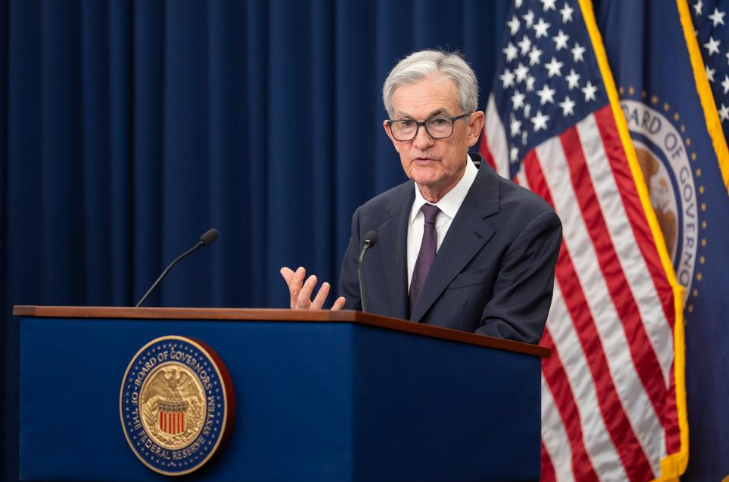
November 24, 2025— According to the latest CME Group “FedWatch” tool, financial markets are pricing in a strong likelihood that the U.S. Federal Reserve will cut interest rates again next month, though uncertainty remains over the magnitude of the move.
As of November 24, traders see a 69.4% probability that the Fed will lower the federal funds rate by 25 basis points (0.25%) to a range of 4.25%-4.50% at its December 17-18 policy meeting. Meanwhile, there is a 30.6% chance that the central bank will hold rates steady at the current 4.50%-4.75% level.
Looking further ahead, expectations for January 2026 suggest a more aggressive easing path. There is a 56.9% probability that the Fed will cumulatively cut rates by 25 basis points by then, keeping the benchmark rate at 4.25%-4.50%. However, markets are also assigning a 22.3% probability to a 50-basis-point reduction (two back-to-back 25-basis-point cuts), which would bring the rate down to 4.00%-4.25%. A smaller 20.8% chance remains that the Fed will leave rates unchanged through January.
The shifting probabilities reflect ongoing debates among policymakers about how quickly to respond to cooling inflation and potential risks to economic growth. While the Fed has already begun cutting rates from their 2022-2023 highs, markets are watching closely for signs of whether the central bank will opt for a gradual or accelerated easing cycle.
Economists note that a 25-basis-point cut in December would align with the Fed’s recent messaging, while a larger move in January could signal heightened concerns about slowing labor markets or persistent disinflation.
Investors will be closely monitoring upcoming economic data, including jobs reports, inflation readings, and Fed officials’ speeches, for further clues on the central bank’s next moves. The December decision could set the tone for monetary policy in the coming year, with implications for mortgages, business investment, and consumer spending.
Separate market sentiment from product execution
Price movement and social attention can react instantly, while technology deployment takes longer. A useful analysis asks what operational milestone would prove that the story has changed real behavior.
That milestone might be production use, a measurable cost change, a regulatory approval or sustained customer demand rather than one day of market volatility.
Identify the assumptions behind the forecast
Every long-term scenario depends on assumptions about adoption, competition, capacity and policy. Making those assumptions explicit helps readers understand what evidence would cause the outlook to improve or weaken.
How to interpret the development beyond the headline
Fast-moving technology and crypto stories should separate confirmed facts from forecasts, market reaction and interpretation. Product launch, adoption, liquidity, regulation and execution can all determine whether an early headline becomes a durable shift.
The useful follow-up is concrete evidence: shipped capability, user growth, audited transactions, financial guidance or regulatory decisions that confirm or weaken the initial narrative.
Watch second-order effects
Major developments can change incentives for developers, creators, exchanges, infrastructure providers and users. The practical impact may appear through costs, standards, distribution or policy rather than through the headline event itself.
Keeping long-term scenarios conditional makes later updates easier to interpret without rewriting early speculation as fact.
Practical implementation check
Before adopting the mechanism described above, define the exact business rule, who controls it and what evidence will show that it worked. Test the failure path as carefully as the successful path, especially when rights, payments or wallet actions are involved.
The final system should also document versioning, rollback and the assumptions that may become stale over time. That turns a one-off experiment into an operating model that creators, users and developers can understand.


 admin