admin
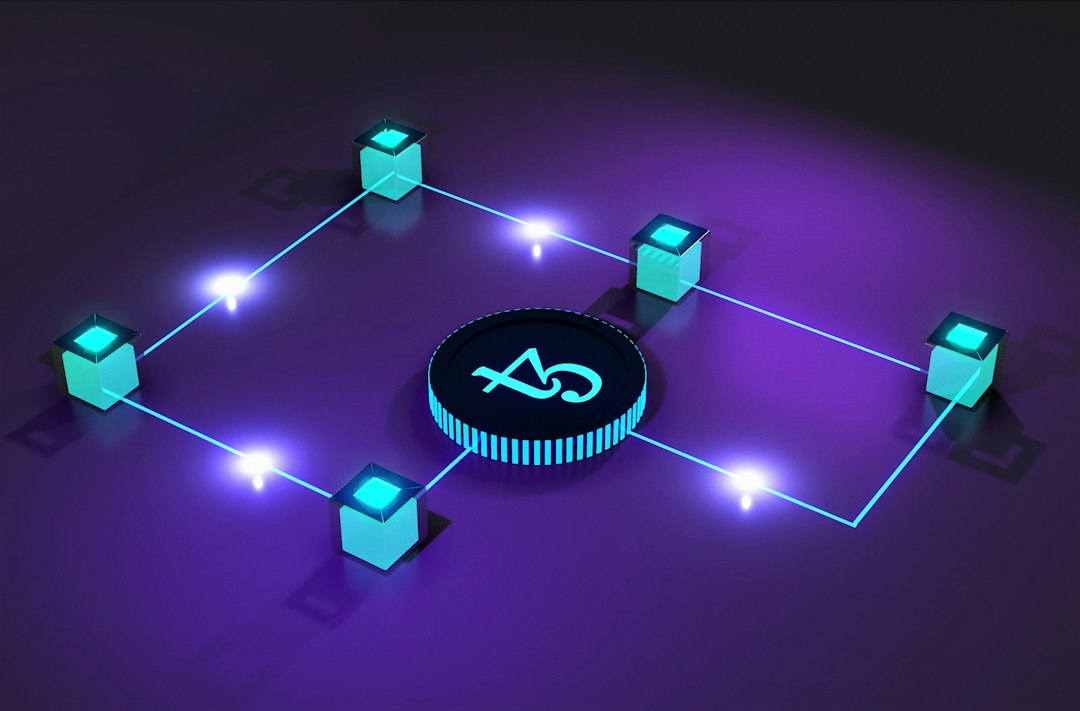
An AI agent may ask a blockchain service to submit a transaction while a separate relayer pays gas. ERC-2771 makes native meta-transactions possible through a trusted forwarder, but it also changes the meaning of the caller a recipient contract should trust. This engineering guide distinguishes a legitimate signer from a relayer, defines abuse cases and presents a reproducible review before a product lets an AI workflow initiate any spending.
List the three separate actors in a meta-transaction
Begin with the user signing an authorization, the gas relay carrying the request and the trusted forwarder verifying before it reaches the recipient. These actors have different powers. The relayer may observe and delay requests, and the forwarder may be a critical security dependency. Treat the AI agent as a proposer that can prepare data but cannot invent the user’s signature or change the spending boundary. A diagram of who signs, who pays and who executes is more useful than a generic ‘gasless’ product label.
The ERC-2771 standard, created July 1, 2020, describes recipient contracts relying on a trusted forwarder to expose the effective sender. That is a protocol boundary, not a proof that every relayer is honest. Design logs to preserve the signing account and the delivery service as distinct identities.
Make forwarder trust explicit and reviewable
The recipient should accept sender context only when the call originates from a recognized trusted forwarder. A random contract can append address-looking bytes to calldata; those bytes cannot be trusted by default. Audit how the recipient implements isTrustedForwarder and how any admin changes the allowlist. For an AI payment contract, an unexpected change to the trusted forwarder should be treated as a security-sensitive upgrade rather than routine configuration.
Write tests for a direct call, an authorized forwarded call, a call from an untrusted forwarder, a malformed appended sender and a forwarded call directed to an incompatible function. Confirm that the actual effective user address is used consistently for balance checks, authorization and event attribution. Verify that the application’s internal records never mistake the gas relay for the person approving the action.
Verify signatures, nonces and call parameters together
A safe forwarder validates the signer, target, calldata, gas bounds, nonce or equivalent replay defense, and expiry rules before forwarding. If it verifies a signature over one amount but executes calldata for another, the protocol has failed its most important duty. Use canonical encoding and well-tested signature verification. Keep per-signer nonce state coherent under parallel requests; AI agents often issue concurrent operations and may retry when network confirmation is slow.
Design test vectors with changed recipients, altered payload bytes, old nonces, expired deadlines and intentionally insufficient gas. After any error, inspect whether the nonce was consumed and whether a transaction’s economic effect occurred. The retry policy must reflect that exact outcome rather than blindly resubmitting an identical authorized request.
Limit gas sponsorship as an economic product feature
Paying gas on the user’s behalf is not free to the platform. A malicious client might submit repeated invalid or unprofitable requests, and an agent that loops on failure can cause the same outcome without malicious intent. Cap sponsored actions per account, transaction class and time window. Separate technical rate limits from monetary budgets: a single expensive request may exceed a low-cost operation budget even if it is the first request of the day.
Treat relayer budget as a measurable cost center. Record a request identifier, sponsorship policy version, preflight reason, gas actually spent, target function and final result. A hypothetical cap of 20 small operations a day is just an illustration; choose real limits from tests. A user-facing explanation should make clear that gasless does not mean an unlimited promise to execute all suggested trades.
Test gas griefing and interaction with recipient logic
An AI agent can generate a plausible call that repeatedly reverts in the recipient. The relay pays for inclusion even though no requested economic action succeeds. Confirm that simulation or preflight reduces avoidable failures but does not advertise a guarantee: chain state can change between simulation and execution. Review reentrancy and external calls in the recipient separately from the forwarder’s authentication logic.
The EIP-712 typed signing standard describes structured authorization, but explicitly leaves replay prevention to the application. Combine domain checks with forwarder nonce logic, and test the relationship across deployment upgrades. Rotate relayer credentials without changing a user’s original signed intent, and disable a compromised forwarding path quickly.
Prepare an audit trail and emergency shutdown
The acceptance checklist should include direct-versus-forwarded identity equivalence, relayer replay, tampering, duplicate submission, wrong-chain signatures, budget exhaustion and unexpected forwarder upgrades. Keep a rollback procedure for contract or relay changes, with a designated human operator. Disable the forwarding service if verification errors rise rather than allowing the agent to attempt more operations to compensate.
Report how many legitimate operations succeeded, how much gas sponsorship was consumed and which rejection categories occurred. Never call a meta-transaction ‘safe’ merely because the signature cryptography passed; authorization, replay protection, execution result and business settlement are separate checks. The resulting design is useful for AI-Web3 products that need both understandable approvals and a defensible operational boundary.