jingzhang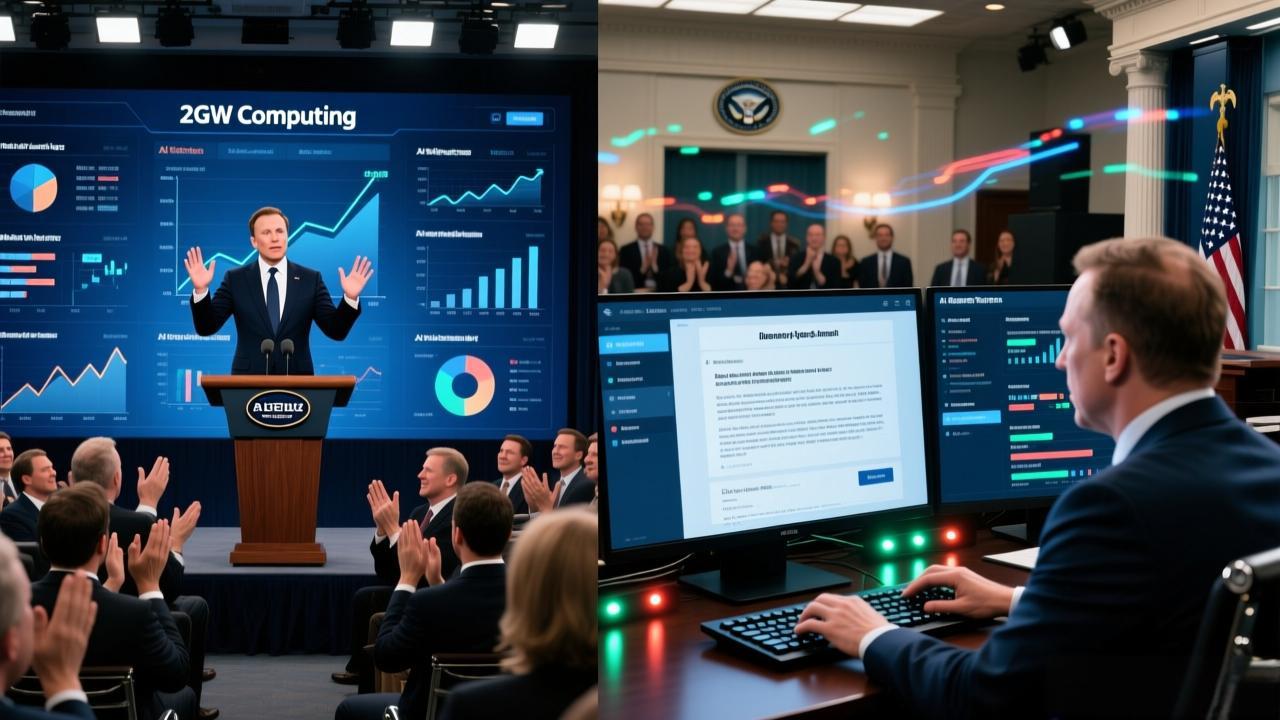
From the end of 2025 to the beginning of 2026, the U.S. AI industry is ushering in a “major reshuffle” that could reshape the global pattern. On one hand, the White House has finalized a national AI regulatory framework to “deregulate” the industry’s development; on the other hand, Musk, leading xAI, has launched a frantic expansion, betting the future on computing power. The interweaving of these two major events has completely rewritten the competitive rules of the U.S. AI industry.
I. White House Takes Action: Signs Executive Order, AI Regulation Enters “Federal Monopoly”
The policy shift is the core trigger for this industry turbulence. On December 11, 2025 (local time), U.S. President Trump officially signed the executive order “Ensuring the Development of a National Artificial Intelligence Policy Framework,” whose core is to establish a “single federal rule” for AI regulation—explicitly restricting the power of individual states to independently regulate AI, and even requiring the Department of Justice to set up a special task force to directly challenge the local AI regulations already issued by California, Colorado, and other states.
Trump stated bluntly at the signing ceremony: “AI may account for 50% to 60% of the U.S. economy in the future. If we have to deal with different regulatory requirements from 50 states, there will be no room for industry innovation.” David Sacks, the White House’s AI affairs director, even added: “It makes no sense for 50 states to run in 50 different directions.”
This policy was met with joy in Silicon Valley—for a long time, the biggest headache for tech companies has been the heavy bureaucratic burden brought by differentiated state regulations. But the opposition was equally fierce:
Terry Aul, vice president of California’s Economic Security Project, sharply criticized: “In essence, this move hands over control of AI to large tech companies, exposing vulnerable groups and children to algorithmic risks.” More unexpectedly, divisions emerged within the Republican Party, with Florida Governor Ron DeSantis and others explicitly opposing federal power overriding state laws.
Obviously, this “deregulation” is not a win-win situation. It has opened a policy gap for the expansion of the U.S. AI industry, but also laid a huge hidden danger of regulatory imbalance.
II. Musk’s Madness: xAI’s Computing Power Nears 2GW, Vowing to Outperform the Entire Industry in Five Years
Synchronized with the policy game, the computing power race in the U.S. AI industry has entered a fever pitch, and Musk’s xAI is undoubtedly the most aggressive player. On December 31, 2025, Musk announced high-profile on the social platform X: xAI has completed the acquisition of its third data center, “MACROHARDRR.”
This data center is adjacent to xAI’s Colossus 2 data center in Memphis, Tennessee. Once put into use, it will bring xAI’s overall computing power capacityclose to the 2GW level—how terrifying is this scale? It can support the operation of about 1.1 million NVIDIA GB200 NVL72 GPUs, equivalent to pouring the electricity consumption of millions of American households into AI training.
Musk’s ambition goes far beyond this. He previously stated publicly: “Within five years, xAI’s AI computing power will exceed the sum of all other companies combined.” To achieve this goal, xAI’s expansion plan can be described as “cost-no-object”:
III. Industry-wide Carnival and Dilemma: Giant Showdowns, Full-blown Funding Pressure
- By the end of 2025, more than 230,000 GPUs have been put into the training of the Grok series of large models, and the Colossus 2 data center has achieved stable power supply of 390 megawatts, approaching the 400-megawatt mark;
- It has purchased a 2-gigawatt gas-fired power plant from overseas as a complete unit, and also jointly built a permanent gas turbine power plant in Mississippi with a Texas energy company, which can provide more than 1GW of power by the beginning of 2027;
- It has deployed 168 Tesla Megapack battery energy storage systems to avoid the impact of computing power consumption on the power grid; it has even built high walls to isolate noise and pollution in response to residents’ complaints.
xAI’s aggressive expansion is not an isolated case, but a microcosm of the computing power race in the U.S. AI industry. The entire industry is frantically “piling up computing power,” but there are many challenges behind it:
1. The Offensive and Defensive Battle of Giants
In early 2025, OpenAI, SoftBank, and Oracle jointly launched the $500 billion “Stargate” AI infrastructure project, planning to build 20 ultra-large-scale data centers. However, due to equity disputes and financing setbacks, the project stalled and was eventually reduced to a single-point promotion at the Abilene, Texas base, with an expected launch of 400,000 GPUs in mid-2026.
Google, on the other hand, has strongly returned to the first echelon of AI driven by the dual engines of the Gemini 3.0 model and TPU chips, directly forcing OpenAI into a “red alert” state. NVIDIA has become the biggest winner—it became the world’s first company with a market value exceeding $5 trillion in October 2025, with shipments of Blackwell chips reaching 6 million units and still holding 14 million orders in hand.
2. The Money-Burning Model Is Unsustainable
The essence of the computing power race is a “money-burning race.” It is reported that xAI’s current monthly operating expenses have exceeded $1 billion. To support expansion, it is actively promoting a new round of financing. Earlier, there were reports that it planned to raise $15 billion at a valuation of $230 billion. Although Musk denied this, the industry clearly knows that its computing power empire cannot do without continuous capital injection.
The “Stargate” project is also facing funding pressure: SoftBank reduced its holdings of NVIDIA stocks to raise funds, Oracle sold assets to cash out, and the initial commitment of $500 billion has not yet been fully locked in.
IV. Conclusion: The Future of This AI Gamble Depends on Three Key Factors
From the White House’s deregulation of AI to the industry-wide computing power carnival, these major moves in the U.S. AI industry are essentially a deep game between technological ambition, capital profit-seeking, and regulatory balance. Musk’s big bet and the showdowns between giants have made this race full of uncertainty.
In the future, the direction of this AI gamble will depend on three core variables:
- Whether the federal regulatory framework can strike a balance between encouraging innovation and preventing risks;
- Whether companies like xAI can withstand the capital and energy pressure brought by computing power expansion;
- Whether companies like xAI can withstand the capital and energy pressure brought by computing power expansion;
- Whether U.S. AI companies can achieve a breakthrough between model competitiveness and commercialization.
- Whether the federal regulatory framework can strike a balance between encouraging innovation and preventing risks;
- Whether U.S. AI companies can achieve a breakthrough between model competitiveness and commercialization.
In any case, this industry turbulence at the end of 2025 has written a key chapter in the global development of AI. And Musk’s 2GW computing power bet will ultimately become an important footnote determining the future industry pattern.
Follow me for continuous updates on the latest developments in the global AI industry~
Follow me for continuous updates on the latest developments in the global AI industry~
Behind this computing power-centric race lies the continuous investment of huge sums of money. It is reported that xAI’s current monthly operating expenses have exceeded $1 billion. To support its computing power expansion plan, it is actively advancing a new round of financing. Earlier reports indicated that it planned to raise $15 billion at a valuation of $230 billion. Although Musk denied the reports, the industry generally believes that the construction of xAI’s computing power empire cannot do without continuous capital infusion. The “Stargate” project is also facing funding pressure: SoftBank reduced its holdings of NVIDIA stocks to raise funds, while Oracle sold assets to cash out to reduce risks. The initial commitment of $500 billion has not yet been fully locked in.
From regulatory deregulation to the computing power carnival, the series of recent major events in the U.S. AI industry are essentially a deep game between technological ambition, capital profit-seeking, and regulatory balance. Musk’s xAI, with its “irrational” expansion posture, attempts to establish an absolute advantage in the field of computing power; the White House’s new regulatory policy has cleared obstacles for industry expansion, but it has also triggered concerns about fairness and security; the showdown between giants such as OpenAI and Google has further exacerbated the industry’s uncertainty.
pattern. Follow me for continuous updates on the latest developments in the global AI industry~In the future, the direction of this AI race will depend on three key variables: whether companies like xAI can withstand the capital and energy pressure brought by computing power expansion, whether the federal regulatory framework can strike a balance between encouraging innovation and preventing risks, and whether U.S. AI companies can achieve a breakthrough between model competitiveness and commercialization. In any case, this industry turbulence at the end of 2025 has written a vivid chapter in the global development of AI, and Musk’s computing power bet will undoubtedly become a key footnote determining the future industry pattern.