jingzhang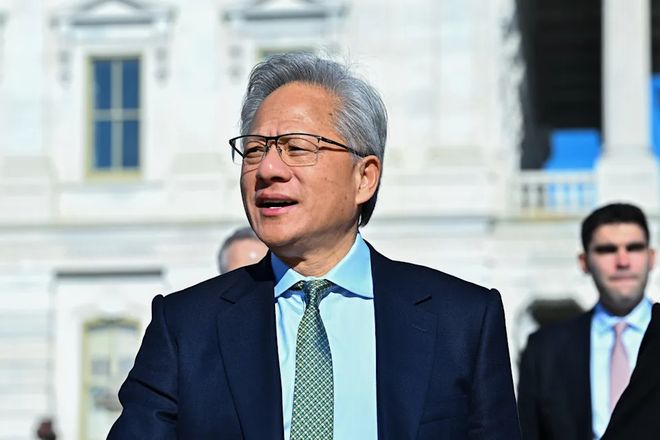
Washington, D.C., December 5, 2025— A contentious proposal to restrict Nvidia and other U.S. chipmakers from selling advanced AI chips to “countries of concern”—including China—has been dropped from the pending National Defense Authorization Act (NDAA), marking a major victory for Nvidia CEO Jensen Huang and the tech industry after a high-stakes lobbying battle.
The defeated measure, known as the GAIN AI Act (Guaranteeing Access and Innovation for National Artificial Intelligence Act of 2025), would have required chip companies to prioritize U.S. customers before selling cutting-edge AI chips abroad. Under the bill, firms would need government approval to export high-end AI hardware to restricted nations, proving that American buyers had first refusal and that no domestic orders were backlogged.
Nvidia’s Victory After High-Profile Lobbying Push
The fight pitted “China hawks” in Congress against Nvidia, other chip giants, and tech firms like Microsoft and Amazon, which argued the restrictions would harm U.S. competitiveness without addressing real supply shortages.
Jensen Huang personally intervened, meeting with President-elect Donald Trump and key lawmakers in Washington this week. Outside the Speaker’s office, Huang told reporters he was there to “discuss AI issues,” but the stakes were clear: The White House faced pressure over whether to allow exports of Nvidia’s latest Blackwell chips to China.
Despite opposition from some cabinet members, Trump signaled openness to exporting “downgraded” Blackwell chips, while the White House’s AI czar argued that selling chips could help maintain U.S. technological dominance. In the end, lawmakers chose not to include the GAIN AI Act in the NDAA, a move Huang called “wise.”
He argued that the bill—compared to an earlier AI Proliferation Act—would have been even more damaging to U.S. interests.
Tech Giants’ Setback, But Fight Isn’t Over
The decision deals a blow to Microsoft, Amazon, and other firms that had hoped legislation would secure their access to AI hardware. However, the battle is far from finished.
A new proposal, the SAFE Act (Security and Feasible Exports Act), is now under consideration in Congress, aiming to codify existing chip export bans into law. Hardline lawmakers are expected to keep pushing for stricter controls.
What Was the GAIN AI Act?
Introduced by Senators in early November, the GAIN AI Act was based on the assumption that U.S. demand for AI chips far outstrips supply, leading to delays for domestic buyers. Critics, including the Brookings Institution, disputed this claim, arguing the bill was vaguely worded and could create unpredictable compliance hurdles.
Key Requirement: Companies selling advanced AI chips to restricted regions would need a license proving U.S. entities had priority purchase rights (ROFR).
Additional Conditions: Applicants had to show no existing backlogs for American customers and that exports wouldn’t cause future shortages.
Brookings’ Concern: The bill focused too narrowly on chips, ignoring bigger AI bottlenecks like electricity and data center capacity.
Amazon CEO Andy Jassy and Microsoft CFO Amy Hood recently stated that their biggest challenges were power and space—not GPU shortages. Meanwhile, Goldman Sachs warns that AI data centers, already consuming 6% of U.S. electricity, could push grid limits to 11% by 2030.
What’s Next?
While the GAIN AI Act is stalled, the political and commercial tug-of-war over AI chips will continue. For now, Nvidia and its rivals have won a reprieve—but Washington’s scrutiny of chip exports to China remains intense.