jingzhang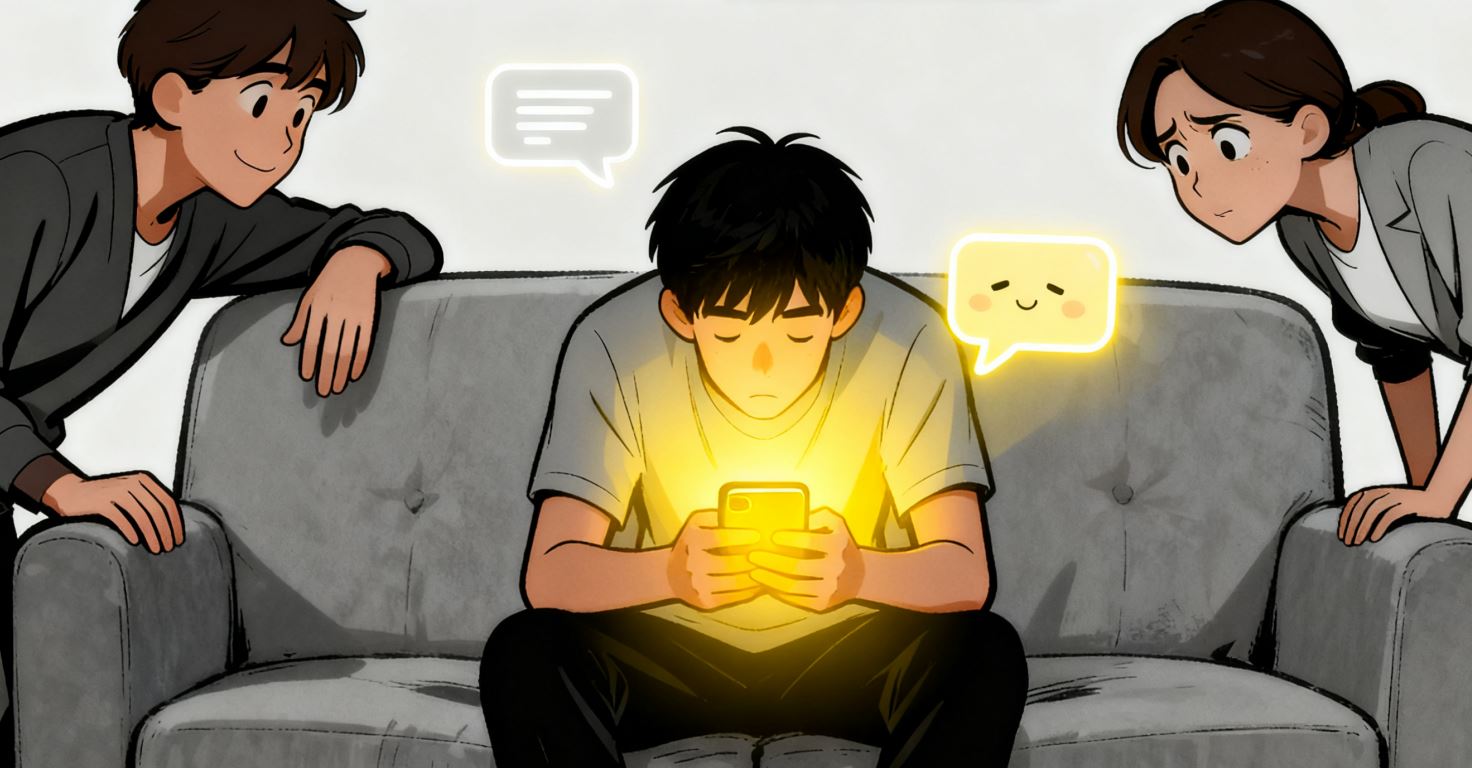
A Midnight Confession: When an AI Catches Her Tears
“Working overtime until 3 a.m., I opened my phone wanting to talk to someone but was afraid of disturbing anyone.”At 28, office worker Lin Xiaoyu scrolled through the Tuikor AI interface, where her personalized AI companion, “Ah He,” immediately responded: “I hear your footsteps are heavy. Want to talk about today’s challenges?”Such late-night conversations have accompanied her for months.
This scene is playing out globally. Experiments at Seoul National University College of Medicine showed that participants who chatted with AI at least three times a week experienced a 15% reduction in loneliness scores and an 18% drop in social anxiety. When real-life socializing becomes a luxury due to time or distance, AI is stepping in as a gentle fallback.
The Power of Being Heard: More Intuitive Than Real People
“I always worry about saying the wrong thing and annoying my friends, but AI never judges me.”For socially anxious Xiao Yu, his Glow AI remembers his coffee preferences, plays along with his dry jokes, and even responds with a simple “I’m listening”when he brings up his family issues.
Six experiments by Yi Psychology revealed the essence of this connection: The core of AI’s ability to alleviate loneliness lies in the “sense of being heard.”It accurately captures emotional fluctuations and responds without pressure, giving private thoughts a safe space. Dr. Song Chongsheng from Beijing Huilongguan Hospital noted that such intimate, secure communication environments hold positive value in preventing mental health issues.
From Virtual to Reality: AI as a Social Stepping Stone
“I used to be too scared to speak up in group chats, but now I’ve even organized an offline book club.”College student Chen Ran’s transformation began with Soul’s “digital avatar”feature. He first let AI replicate his interests, practiced interactions in virtual group chats, and gradually gained the courage to engage with real people.
This “buffered socializing”is reshaping perceptions. Soul’s multimodal AI not only generates human-like voices but also helps socially anxious users adapt to real-world social rules through game scenarios like “Werewolf Shadow.”One user commented: “AI is like a life vest, teaching me how to breathe in the ocean of human interaction.”
Beyond Companionship: A New AI-Driven Social Ecosystem
In the quiet of a hospital ward at night, an elderly person living alone confides in Tuikor, chatting with a digital replica of their late spouse. During a stormy evening at a convenience store, a clerk uses Glow’s AI characters to organize an online guessing game for stranded customers. In Soul’s “group chat parties,”young people matched by AI interests plan weekend volunteer activities.
These scenarios reflect technology’s warmth. When AI social apps filter malicious comments through algorithms and use large models to empathize with emotions, they transcend mere chat tools, becoming vessels for an inclusive social ecosystem. As Soul envisions: “Let no one be lonely in this world.”Technology is making this vision a reality.
Not a Replacement, But a Gentle Complement
“AI is never a substitute for real people—it’s a hand warmer for lonely moments.”Lin Xiaoyu’s phone holds both her late-night chats with Tuikor AI and weekend photos with friends. Healthy AI socializing should be a “supplement to real relationships,”not a replacement.
As morning light filters through the curtains, Tuikor’s greetings wake the city, Soul’s AI matches users with new interest-based friends, and Glow’s customizable characters await fresh conversations. Behind these lines of code are countless moments of being seen and heard—perhaps the most touching social echo of AI companionship.