jingzhang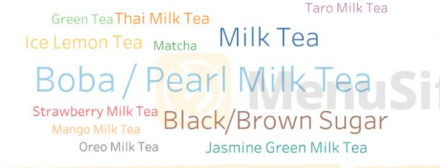
On the streets of the United States, cups of ready-to-drink tea originating from the East are quietly transforming local drinking habits — and reshaping the fate of Chinese tea drink brands.
Before 2010, Americans’ understanding of “tea drinks” was largely limited to lemon tea in coffee shops or Thai-style milk tea. But with the arrival of Taiwanese brands like Gong Cha and Tiger Sugar, the bubble tea craze quickly swept across the country. According to MenuSifu’s 2025 U.S. Ready-to-Drink Tea Report, the number of bubble tea shops in the U.S. has surged to 6,636 in 2024, and is projected to reach 7,845 in 2025, fueled by the entry of mainland Chinese brands such as Heytea and Chagee.
The U.S. ready-to-drink tea market is now valued at $2.6 billion and is growing at an annual rate of 9.1%.
Behind these numbers lies the collective ambition of Chinese tea drink brands, which have reached the limits of domestic competition and are now seeking new growth overseas. The report indicates that over the next decade, as millennials become the dominant consumer group, the potential size of the U.S. bubble tea market could expand by 5 to 10 times. It also highlights that no single tea drink brand in the U.S. currently holds more than a 5% market share — a stark contrast to the coffee market, which is dominated by a few major players. This means the market is still wide open, and opportunities abound.
Familiar names to Chinese consumers — Heytea, Chagee, Mixue, Ningji (Lemon Hero), and more — are now popping up on the streets of New York and Los Angeles. Each brand brings its own strategy and ambition, attempting to replicate, or even surpass, their success in China on foreign soil.
But the road ahead is far more challenging than they imagined.
The State of Chinese Tea Brands Going Global: Who’s Landing in the U.S.?
Brands from China have adopted diverse strategies in their U.S. expansion.
Heytea has gone for a premium, high-profile approach. Its goal is clear: to position itself as a high-end beverage brand, directly competing with Starbucks. Its first overseas LAB store, located on New York’s Times Square — aka “the crossroads of the world” — serves as a litmus test for the brand’s global ambitions. Heytea set the price of its drinks at $9.9 per cup, significantly higher than its domestic pricing, as a way to test American price sensitivity. The result? On opening day, the store attracted long queues, selling over 3,500 cups — a preliminary validation of its premium strategy.
In contrast, Chagee took a more understated approach. Its first North American store, located in the Westfield Mall near Beverly Hills in Los Angeles, sold 5,000 cups on its debut day, but at much lower prices than Heytea. A large cup of its signature “Bo Ya Jue Xian” (a oolong tea with pearls) is priced at just $5.95, carving out a niche between Heytea and local competitors. This pricing strategy reflects Chagee’s aim to carve out its own space in the competitive North American market: maintaining brand identity while remaining accessible to mainstream consumers.
Mixue, another major player choosing prime locations, has adopted a “premium location, affordable product” strategy. It launched simultaneously on both U.S. coasts: its first store is in Manhattan’s Canal Street (266 Canal St.), a 195-square-meter flagship in a prime spot, while its Hollywood location sits right across from the TCL Chinese Theatre, targeting the global tourist crowd. Clearly, Mixue is leveraging its proven low-price, high-volume model in China and transplanting it into the high-traffic, high-cost U.S. market.
Other brands are taking a more cautious, lightweight approach. For example, Cha Yan Yue Se (Tea Beauty) entered via e-commerce, while Ningji launched under a new brand name: BOBOBABA — derived from what young Americans call bubble tea: “boba.” The rebrand was necessary because “Ningji” is hard to pronounce and carries no meaning for American consumers.
As other brands like Cha Bai Dao (Tea Plus) and Mo Li Nai Bai (Jasmine Milk Bar) enter the U.S., the Chinese tea drink invasion has evolved from isolated experiments to a multi-pronged, diversified expansion. But the real challenges — the harsh realities of the U.S. market — are only just beginning.
The Hidden Pressures Behind the Glitz
The first major hurdle? Sky-high costs that eat into profitability.
In the U.S., expensive rent, high labor costs, and competition for prime locations drive up operational expenses, forcing Chinese tea brands to achieve far higher per-store revenue than they would domestically — putting immense pressure on their business models. For instance, Heytea’s single-store investment in the U.S. exceeds 1million,with600,000 in hard costs and the remaining $400,000 largely spent on securing high-traffic locations. Such investment levels are daunting for newcomers.
According to Red Star News, even a small U.S. tea shop of just a few dozen square meters — including equipment, renovation, rent, and inventory — can cost up to 500,000,whilelargerstorescanreachnearly1 million. Labor is also costly: the minimum monthly wage for a U.S. service worker is $4,000. For a typical tea shop with four staff, monthly payroll alone exceeds 300,000 RMB. This raises serious questions about whether Chinese tea brands can replicate their low-price models in the U.S.
Beyond hard costs, differences in how business is conducted between China and the U.S. present additional hurdles.
Wang Jie, who returned from the U.S. market, shared her struggles with the Shanghai headquarters and media. “I came back and dyed my hair — I got so many gray hairs from stress,” she said, illustrating just how tough it is to break into the U.S. market.
She cited renovations as an example: what takes seven days to complete in China could take much longer in the U.S. due to strict regulations. Sunday work is prohibited, hours are limited, noise restrictions apply, and construction can only proceed after receiving phased approvals. “You’re not starting from zero in the U.S. — you’re starting from minus three,” Wang said.
These inefficiencies are reflected in the numbers. “In China, we sign an average of 98 stores per month. What takes us three months in China might take three years to achieve in the U.S.,” she added.
Then there’s the cultural gap. American consumers still largely see tea drinks as “sweet beverages.” While domestic brands have reduced sugar content from around 12 to 8–9, American products typically start at 16. Additionally, Americans have limited knowledge of Chinese tea culture, and their understanding of “tea” differs significantly from that of Chinese consumers.
Looking ahead, the U.S. market also presents a dual competitive landscape: entrenched local brands defending their turf, and intensifying competition among Chinese brands themselves.
On one front, Chinese brands must compete with homegrown players like Boba Guys for the mainstream audience. On the other, competition among Chinese brands is heating up. Boba Guys, founded by Chinese-Americans, has been operating in San Francisco for a decade and has cultivated a loyal customer base. Their stores feature modern minimalist designs, and their product lines include innovations like organic milk and locally sourced tea — posing direct competition to newly arrived Chinese brands.
Moreover, MenuSifu notes that California, New York, and Texas account for 33.9% of all U.S. bubble tea outlets, but this clustering effect is shrinking profit margins. For Chinese tea brands entering the U.S., the road is steep and fraught with challenges. Yet it is precisely in these adversities that the keys to success are emerging.
Path to Success: From Survival to Roots
To move beyond mere survival and establish long-term roots in the U.S., Chinese tea brands must break free from their domestic success formulas and truly integrate into American society. This demands systematic strategy adjustments and innovation.
- Precision in Location is Foundational
In the U.S., store location determines initial foot traffic and customer base. According to MenuSifu’s data team, which analyzed population density, competitor distribution, and foot traffic, there are at least 30,000 shopping malls and commercial districts in the U.S. that can support one or two ready-to-drink tea brands. On average, one tea shop can thrive for every 50,000 consumers.
While this data provides a quantitative guide, execution requires finer calibration. For example, Chagee spent 13 months preparing for its U.S. debut, conducting extensive market research before settling on a “follow Starbucks” strategy — leveraging the coffee giant’s established commercial zones to attract customers.
A common industry view is that it’s best to first establish a presence in Chinese-majority neighborhoods, using familiar Asian demographics as a foundation, before gradually expanding to mainstream audiences. Additionally, the diverse U.S. population requires brands to deeply understand the specific needs of different communities before opening stores. - Product Localization is Key to Unlocking Bigger Markets
American consumers’ perception and taste preferences for tea drinks differ significantly from those in China.
MenuSifu’s report shows that in 2024, black sugar-based tea products saw a 48.7% sales surge in the U.S., while matcha-flavored drinks grew 21.1%. Compared to Chinese consumers, Americans show stronger demand for sweetness, matcha flavors, and creaminess.
To adapt, brands are making changes. Chi Yuan (Original Tea) founder Chi Xingyuan consciously increased the sugar content of his recipes by at least 30% compared to Chinese standards. “This isn’t a compromise — it’s respect for the local market,” he said. He added, “Americans also enjoy texture — they prefer bigger pearls. That’s why we use larger tapioca, and our top-selling topping is popping boba.”
Heytea’s “California Sunset,” a region-specific drink that incorporates local oranges and honey, has monthly sales exceeding 3,000 cups — proving that localized, innovative products resonate more and help differentiate from homogenous local competition. Ningji focuses on classic pearl milk tea and American-style fruit teas in the U.S., with brand lead Wang Jie explaining: “North American consumers prefer pearl milk tea. To localize, we have to cater to their tastes.” - Expanding Consumer Scenarios & Enhancing Experience
Unlike China, where most tea shops are small kiosks, the U.S. market favors larger stores — often over 60 square meters. For example, Yuan Tea’s U.S. outlets include two-story locations. This shift forces brands to think about how to maximize larger spaces to enhance the customer experience.
MenuSifu data shows that 36% of U.S. tea shops bundle tea with desserts, fried chicken, or even sushi to create “tea plus” experiences.
Some brands have introduced “tea pairings”: Yuan Tea offers soufflés and dorayaki (Japanese pancakes), which make up nearly 20% of sales; Jidong (Heartbeat) Tapioca’s egg tarts contribute 40% of its revenue, with up to 2,000 sold daily; Lan Ji adds pineapple buns to its menu. These add-ons not only boost average spending but also attract customers who wouldn’t normally drink tea — creating new demand. - Supply Chain Localization is Critical for Long-Term Growth
Ultimately, the deepest foundation for sustainable growth lies in localizing the supply chain — which determines how far a brand can go abroad.
Heytea has invested heavily in building a “regional distribution center + micro-fulfillment” supply system in North America to control costs and ensure product consistency. Wang Jie highlighted an even more fundamental challenge: due to high air freight costs, she revealed plans to grow lemons locally in the U.S. to secure a stable supply of core ingredients. This bold idea underscores a key truth: without a localized supply chain, there is no true internationalization. - Elevating Competition to Cultural Integration & Brand Values
In the end, the battle is no longer just about products — it’s about cultural resonance and brand storytelling. The most successful brands in the U.S. market will be those that don’t just sell tea, but tell a story, build a lifestyle, and become part of the cultural fabric.