jingzhang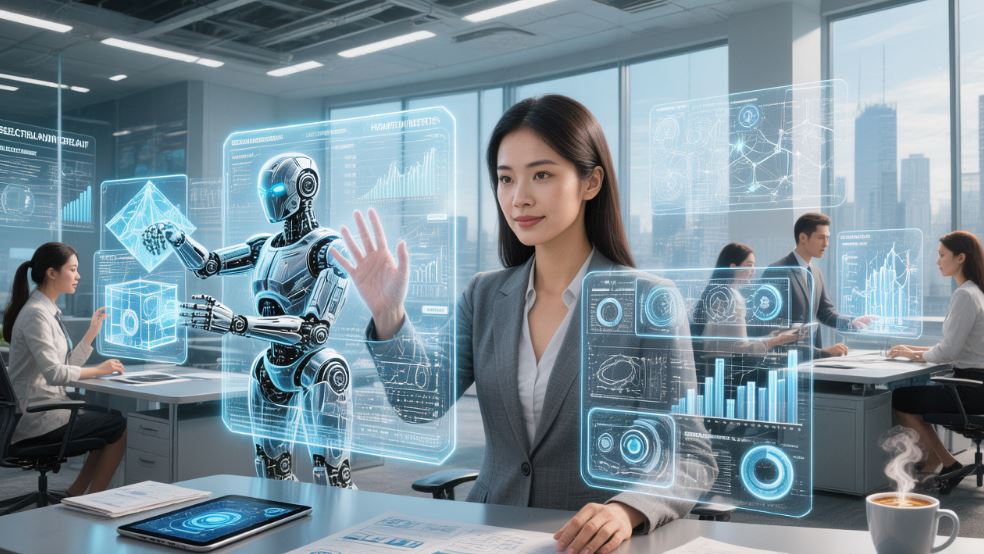
As artificial intelligence technology permeates the workplace at an unimaginably rapid pace, a silent yet profound transformation has quietly taken place. More and more enterprises are starting to introduce AI digital employees – these “virtual colleagues” who don’t need rest and are highly accurate and efficient, are gradually taking over repetitive and highly standardized tasks in traditional positions. Data shows that currently, about 30% of enterprises have deployed different types of digital employees, and this proportion is expected to double within the next two years.
I. Customer Service Position: A “Professional Consultant Team” Available 24/7
The traditional customer service position is the first to be impacted. Tuike AI customer service can respond to hundreds of customer inquiries simultaneously. With natural language processing technology, it can accurately understand needs and provide personalized solutions. These AI customer service agents are tireless and continuously optimize their service logic through ongoing learning. They enhance customer satisfaction and reduce customer service labor costs by 80% – this is not about replacing emotional warmth but using efficiency to free up human resources to handle more complex emotional needs.
II. Data Analysis Position: A “Decision-Making Engine” that Cracks Complex Data in Seconds
In the data-driven business world, AI digital analysts demonstrate astonishing capabilities. They can complete data cleaning, analysis, and visualization in just a few minutes, tasks that would take humans several days. Moreover, they can capture subtle patterns and business opportunities that humans are likely to overlook. A certain retail enterprise once discovered through digital analysts the “peak repurchase rate among specific age groups during weekend evenings.” After adjusting its promotional strategies accordingly, its monthly sales increased by 18% month-on-month.
III. Content Creation Position: An “Efficient Production Line” for Multi-style Content
From social media copy to product detail pages, from news releases to short video scripts, AI content creators are reshaping the production model. They can quickly generate initial drafts in various styles based on brand tone and target audiences. After a certain beauty brand’s marketing department introduced digital creation tools, its content output efficiency increased by three times, and it maintained a high level of consistency with human-created content in terms of visual language and value output – this is not about replacing creativity but making inspiration come to fruition more quickly.
IV. Finance Position: A “Zero-error Accounting Processing Expert”
In basic financial work, AI digital employees have become the main force. Their tasks include invoice recognition and verification, cross-system account reconciliation, initial review of reimbursement documents, and automatic generation of tax declaration forms. After a certain manufacturing enterprise deployed a digital financial specialist, the accuracy rate of invoice processing reached 99.99%, the month-end closing cycle was shortened from 5 days to 8 hours, and the entire process was fully traceable to meet compliance requirements.
V. Administrative Position: An “Invisible Coordinator” for Intelligent Office Work
Are there conflicts in meeting arrangements, disorganized file archiving, and tedious information entry? AI administrative assistants are addressing these pain points: they can intelligently coordinate multiple people’s schedules, automatically generate meeting minutes with summaries, and classify and manage electronic documents. After a certain technology company used digital administrative tools, its meeting organization efficiency increased by 60%, allowing employees to devote more energy to core business tasks.
As the development of AI digital employees has gone beyond the stage of single functions and evolved towards collaborative work, they are promoting the implementation of “virtual departments.” In a product launch task, five digital roles – “market analyst,” “product designer,” “content creative,” “media advertiser,” and “customer service specialist” – can automatically communicate, tasks, and make joint decisions to complete the entire process from demand research to promotion and implementation. What’s even more promising is that with the integration of robotics technology, digital employees are moving towards “physical embodiment.” Some enterprises have already tried to equip physical robots with the “intelligent cores” of digital employees, having them serve as shopping guides in offline stores, conduct inspections in factories, and undertake sorting tasks in warehouses, truly breaking the boundary between the virtual and the real.