jingzhang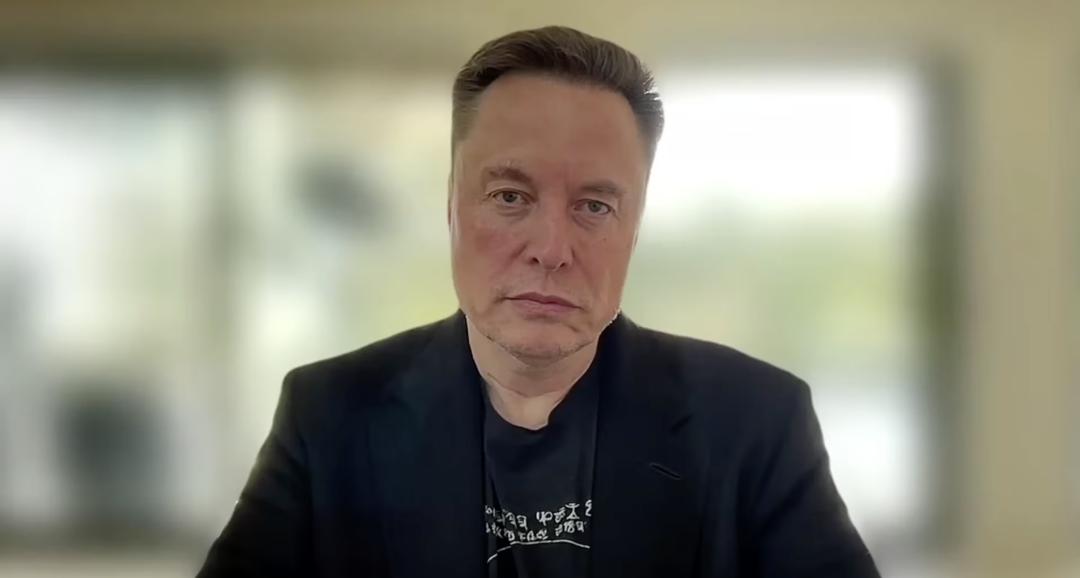
Elon Musk recently made a striking prediction: by 2030, artificial intelligence may collectively surpass the combined intellectual capacity of all humans. This bold claim came alongside revelations about the rapid advancements of xAI — his AI venture — and its flagship model, Grok, showcasing Musk’s aggressive strategy in the global AGI race.
Since its debut in late 2023, Grok has evolved at breakneck speed. Starting as a basic chatbot on X (formerly Twitter), it quickly upgraded to Grok-1.5 with enhanced reasoning and a 128k-token context window. By April 2024, Grok-1.5V introduced multimodal capabilities, and Grok-2 added image generation and a lightweight “mini” version. Grok-3, launched in February 2025, focused on complex problem-solving, and the latest iteration, Grok-4, is now regarded as one of the most capable AI models available.
This rapid progress stems from xAI’s elite team — talent drawn from DeepMind, OpenAI, and Tesla — and a unique philosophy: truth-seeking and boldness. Inspired by The Hitchhiker’s Guide to the Galaxy, Grok adopts a rebellious, witty tone, answering questions others avoid. But beneath the humor lies a serious mission: to build the most truth-aligned AI possible. To achieve this, xAI is pioneering “synthetic data” generation — using AI to refine and rewrite human knowledge into a more accurate, self-curated repository dubbed “Grokipedia.”
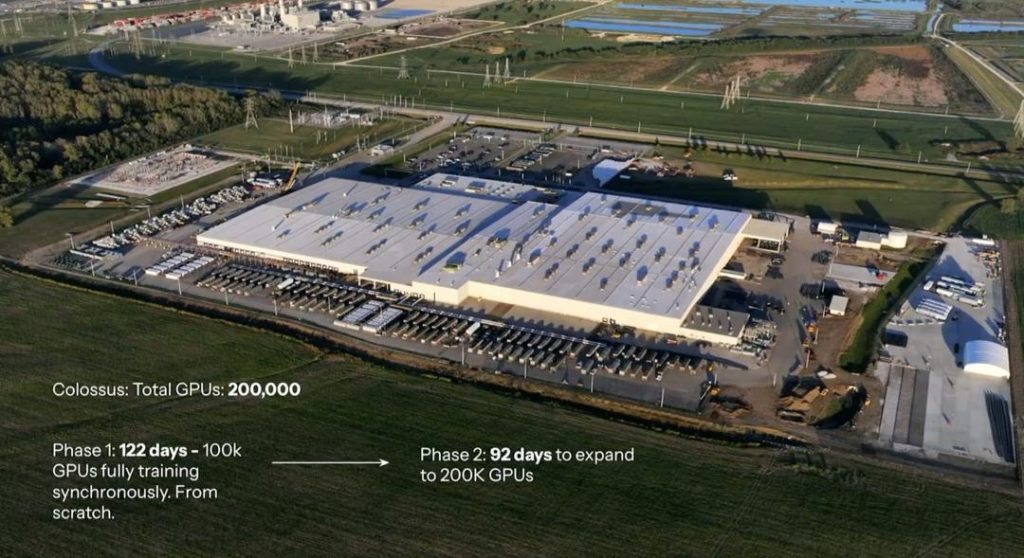
Musk’s infrastructure advantage is equally formidable. X provides real-time data for training, while Tesla’s AI chips — including the upcoming AI5, projected to be 40x more powerful than AI4 — fuel model development. In late 2024, Musk completed “Colossus,” a supercomputing center in Memphis with 200,000 H100 GPUs, now training Grok-4 and soon Grok-5.
Grok is also making its way into Tesla vehicles, set to launch as an in-car AI assistant by late July 2025, further integrating AI into daily life.
In the AGI race, Musk aims to propel xAI ahead of rivals like OpenAI and Anthropic. While OpenAI grows more closed and cautious, xAI embraces openness — recently releasing Grok-2.5 as open source — though with restrictions. Balancing openness with safety remains a challenge, as seen in Grok’s occasional controversies.
Musk envisions AI not as humanity’s rival, but as a catalyst to sustain civilization’s progress, especially as global population growth slows. He predicts AI will exceed any single human’s capability next year, and by 2030, surpass all humans combined.
For better or worse, Musk has placed his bet on the future — and the game has only just begun.