jingzhang
AI giant OpenAI has made another major breakthrough in its commercialization efforts!
According to the latest reports, OpenAI will officially launch a chatbot advertising service in February 2026, with the core charging model confirmed as “Cost per Impression (CPM)”, differing from the industry’s common Cost-per-Click (CPC) model. This information is not mere rumor; it comes from multi-party verification reports by authoritative financial media outlets like Cailian Press and Sina Finance, forming a complete information loop when combined with OpenAI’s previously disclosed advertising test plans. The credibility is very high.
As a global bellwether for generative AI, OpenAI’s foray into advertising not only breaks its long-standing “cautious approach to ads” but also has the potential to reshape the advertising monetization paradigm for the AI era. Behind this move lies tremendous pressure from computing costs and capital valuation.
📢 News Origin & Information Sources: Multi-party Authoritative Corroboration, Far from Groundless
The core information about OpenAI’s February launch of chatbot ads primarily comes from three authoritative channels, each with clear reporting backing it, ensuring professionalism and accuracy:
- Core News Break: Cailian Press reported on January 21, 2026 (11:35 AM), explicitly stating, “OpenAI is said to launch a chatbot advertising service in February, charging per ad impression.” This is the primary source for this news[superscript:5].
- Detailed Supplementary Source: Sina Finance followed up on January 21, 2026 (12:51 PM), citing informed sources. It added that OpenAI has provided dozens of advertisers with the new chatbot ads, requiring each to commit to spending less than $1 million during the trial period. Ads are set for an early February launch. It was also clarified that “self-service ad purchasing technology for advertisers is not yet available, but related features are being developed.”[superscript:3]
- Contextual Supporting Source: Reports from media like 36Kr, Tencent News, and Phoenix News earlier (January 17-19) noted that OpenAI officially announced on January 17 (early morning) that it would initiate ChatGPT advertising tests in the US market within the coming weeks, laying the groundwork for the February official launch and creating a complete information link[superscript:1][superscript:4][superscript:6].
Furthermore, considering OpenAI CEO Sam Altman’s previous public statements, the company’s recent financial data, and product matrix adjustments, the rationale and inevitability behind this advertising service launch are further corroborated; it is not a last-minute decision.
🔍 Key Details: CPM Charging, Ad Formats “Restrained yet Innovative”
Based on details disclosed by multiple authoritative reports, OpenAI’s new chatbot advertising service is not a simple replication of traditional internet ads but is specifically designed with AI characteristics in mind. Key details are as follows, all sourced from the aforementioned authoritative information:
Core Charging Model: Cost Per Impression (CPM), Differentiating from Industry Norms
Unlike the mainstream “Cost-per-Click (CPC)” model in current internet advertising, OpenAI has explicitly adopted a “Cost per Impression” model — meaning advertisers pay only for each display of their ad, regardless of whether the user clicks or converts[superscript:3].
This choice is highly relevant to ChatGPT’s product format: as a conversational AI, user interaction revolves around “dialogue turns.” Ad displays will be embedded within the dialogue flow. Charging per impression is easier to measure, fits the product scenario better, and can lower initial trial costs for advertisers (no worry about wasted costs due to low click-through rates).
Ad Display Format: Non-intrusive to Dialogue, Focusing on “Precise Matching + Follow-up Queries”
Prioritizing user experience, OpenAI’s ad formats are notably “restrained,” avoiding abrupt insertions that disrupt conversation flow. Specific formats have been disclosed in official test plans[superscript:1][superscript:7]:
- Placement: Ads will not be embedded within the AI’s answer text. Instead, they will appear as a “Sponsored” labeled block at the bottom of a dialogue turn, clearly separated from the core answer.
- Precision: Triggered only when the model determines a high relevance between the ad and the user’s current query. For example, when a user asks for Mexican dinner recipes, a sponsored tip for ingredient shopping might appear below the recipe answer.
- Interactivity: Users can directly ask ChatGPT for more details about the ad content or even make purchase-related inquiries within the chat interface, forming a “consultation-ad-decision” closed loop.
Targeting Scope: Tiered Operations, No Ads for Premium Users
To balance commercialization and user experience, OpenAI employs a “tiered operations” strategy with clear limits on ad targeting[superscript:1][superscript:4][superscript:7]:
- With Ads: Primarily targeting free users in the US and users of the newly announced low-cost $8/month subscription tier, ChatGPT Go.
- Ad-Free: ChatGPT Plus ($20/month), Pro ($200/month), and enterprise users will continue to enjoy a 100% ad-free experience. This differentiation further highlights the value of premium subscriptions.
💡 The Underlying Logic: From “Rejecting Ads” to “Active Deployment,” OpenAI’s Dilemma and Ambition
Many are unaware that OpenAI was previously extremely cautious about “AI + ads.” CEO Sam Altman stated in an interview, “Ads plus AI makes me especially uneasy. I think ads are the last resort for our business model.”[superscript:1][superscript:8]
This shift to actively launching an ad service is driven by a dual force of “practical pressure” and “platform ambition,” with relevant data from authoritative media reports:
1. Soaring Computing Costs, Massive Losses
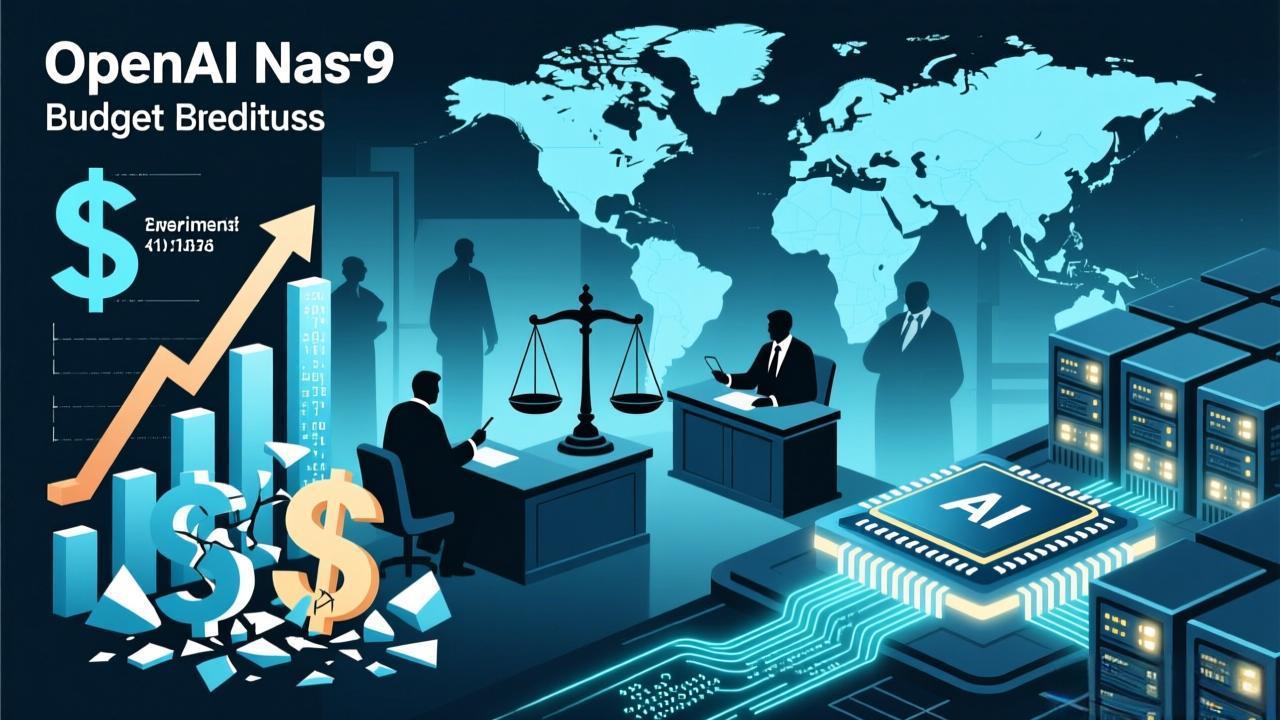
OpenAI’s “burn rate” sets industry records: In the first half of 2025, the company’s operating losses reached a staggering $8 billion. Market rumors suggest losses for Q3 2025 alone might exceed $12 billion[superscript:1].
The core reason is compute investment: OpenAI has committed to spending approximately $115 billion on compute infrastructure and data center construction between 2025 and 2029, with long-term planned AI infrastructure investment as high as $1-1.4 trillion[superscript:1].
Previously, OpenAI’s revenue relied mainly on subscriptions (~60% of revenue) and B2B API services. However, subscription conversion is low — as of October 2025, only about 5% of its nearly 900 million weekly active users were paying, leaving the vast free user base unmonetized[superscript:1]. Advertising becomes the necessary lever to activate this traffic value and help offset losses.
2. Capital Valuation Pressure, Needing a “Second Growth Curve”
Currently, OpenAI is preparing for a new funding round targeting $100 billion, aiming to push its valuation from $500 billion at the end of 2025 to $830 billion[superscript:1].
Clearly, positioning solely as an “AI efficiency tool” cannot support an $830 billion valuation. OpenAI must transform from a “tool” into a “platform,” and advertising is a key lever to build that platform ecosystem and enhance traffic value. Internal OpenAI projections estimate ad revenue alone could surpass $10 billion by 2027. By 2030, the target revenue from non-paying users (ads + transaction sharing) is as high as $110 billion[superscript:1].
3. Industry Competition Forces Action, Seizing First-Mover Advantage in AI Ads
As tech giants like Google and Meta accelerate their generative AI deployments, ChatGPT’s first-mover advantage is gradually narrowing. Google has begun testing ads in its AI chatbot, and Meta is exploring AI integration with social ads[superscript:1]. If OpenAI doesn’t act promptly, it risks missing the blue ocean of AI advertising and falling further behind competitively.
🔮 Future Impact: Reshaping the AI Ad Landscape, These Groups Will Be Deeply Affected
OpenAI’s launch of chatbot advertising is far more than a simple “revenue stream”; it could trigger chain reactions affecting the entire AI and advertising industries:
- For the Advertising Industry: Breaks the monopoly of traditional “search ads + feed ads,” ushering in a new era of “Conversational AI Advertising.” Formats featuring precise user intent matching, interactivity, and non-intrusiveness could become mainstream, especially creating new marketing opportunities for retail, local services, etc. (e.g., retail giants like Walmart and Shopify have already engaged in early API collaborations with OpenAI)[superscript:1].
- For the AI Industry: Pressures other AI chatbot vendors (e.g., Baidu’s ERNIE Bot, Alibaba’s Tongyi Qianwen) to follow suit with ad monetization, potentially forming diversified “subscription + ads + API” revenue models and pushing AI industry commercialization toward maturity.
- For Users: Free users gain more feature access (e.g., ChatGPT Go offers 10x the usage limits of the free tier) but must accept ads. The experiential value of premium paid users is further highlighted, solidifying user segmentation.
- For Advertisers: Gains a novel, precise advertising channel. Particularly for SMBs, leveraging ChatGPT’s user base and intent-matching capabilities could lower marketing costs. The CPM model may also offer better cost-efficiency.
📌 Summary: The “Inevitable Path” for AI Commercialization, Controversy and Opportunity Coexist
From Cailian Press’s initial report on the “February ad service launch,” to Sina Finance’s added details, and 36Kr’s analysis of the underlying logic, every step of OpenAI’s advertising play has clear information support and practical rationale.
Undeniably, this move represents a compromise between OpenAI’s “original vision” and “reality” — the AI giant that once rejected ads has ultimately resorted to what it called its “last resort,” driven by dual pressures of compute costs and capital valuation. However, this “restrained yet innovative” ad format might also chart a sustainable commercialization path for the AI industry, enabling broader accessibility of AI technology based on its ability to “self-fund.”
The advertising service is reportedly launching first in the US in early February, potentially expanding to other global markets later. When it does, AI chatbots will no longer be just “Q&A tools” but will become new platforms connecting users and advertisers. A revolution in AI advertising is about to begin.
✨ Follow us for the latest updates on OpenAI’s advertising service and to unlock cutting-edge insights into AI commercialization!