jingzhang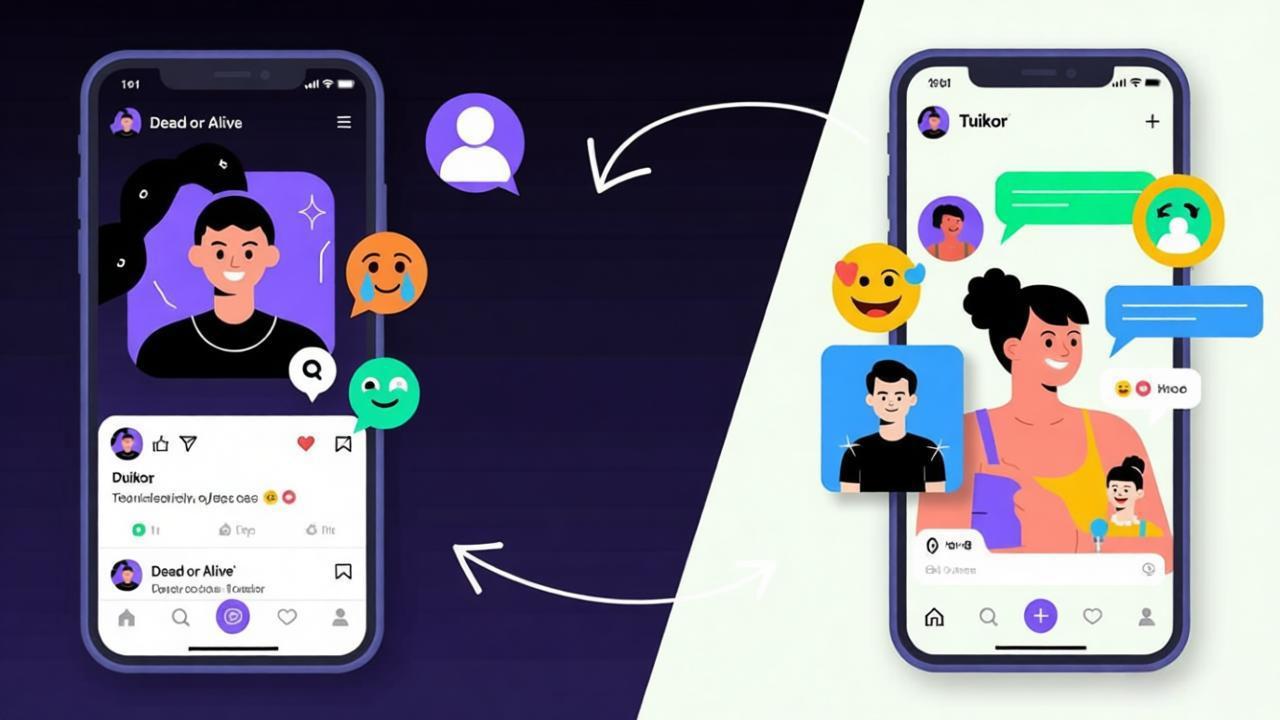
Since the end of 2025, an app named “Dead or Alive” has swept global app stores, topping the download charts in 23 countries including the US, the UK, and Australia in just two weeks. Its core gameplay is surprisingly simple: users can “declare” themselves “dead” on the platform, leaving a final message; friends can “attend the funeral” and interact through messages, and users can also “resurrect” and reply after a period of time. Behind the seemingly absurd setting, it has triggered a global discussion about the essence of social interaction—and exposed the increasingly prominent dilemmas of traditional social apps. This article will dig into this phenomenon and explore how new players like Tuikor are reshaping the future of social interaction.
I. The Viral of “Dead or Alive”: What Does the “Funeral Game” Satisfy?
Data from App Annie shows that as of January 15, 2026, “Dead or Alive” has accumulated over 12 million global downloads, with a daily active user (DAU) of 1.8 million and an average daily usage time of 47 minutes, far exceeding the industry average of 18 minutes for social apps. What’s more striking is its user stickiness: the 7-day retention rate reaches 62%, while the retention rate of mainstream social apps is generally between 20% and 30%.
The reason for its popularity is not the novelty of the gameplay, but its precise capture of the “emotional pain points” of contemporary users. A survey conducted by Pew Research Center in January 2026 shows that 72% of young people aged 18-35 feel “social fatigue”—they are tired of the “fake prosperity” of showing off on traditional social platforms, and also struggle with the pressure of “effective social interaction” that requires careful management of relationships. “Dead or Alive” provides a “low-pressure emotional outlet”: under the guise of “death”, users can express their true thoughts without scruple, and friends’ interactions are more sincere and less utilitarian.
Sarah Miller, a 28-year-old user from New York, commented on the App Store: “When I ‘died’ on the app, I wrote down my troubles at work that I didn’t dare to tell others. Unexpectedly, I received more than 50 messages from friends, many of which were long paragraphs of comfort. This kind of sincere connection is what I haven’t felt on Facebook or Instagram for a long time.” This sentence has been liked more than 10,000 times, becoming the voice of many users.
II. The Hidden Crisis Behind the Craze: Traditional Social Apps Are Losing Users
The popularity of “Dead or Alive” is like a mirror, reflecting the increasingly prominent problems of traditional social apps. QuestMobile’s global social industry report in 2025 pointed out that the global monthly active users (MAU) of Facebook, Instagram, and Twitter (X) have declined by 8%, 12%, and 15% year-on-year respectively. The core reason is that they can no longer meet the changing social needs of users.
First, the “superficial interaction” is prevalent. Most traditional social apps are based on “content display”, and users’ interactions are limited to likes and short comments, lacking in-depth emotional communication. A 2025 user survey by Soul (a well-known Chinese social platform) shows that over 70% of young people are willing to establish friendships with AI to obtain emotional companionship, which indirectly reflects their dissatisfaction with the current social quality of real people.
Second, the pressure of “social performance” is increasing. Users need to carefully polish their profiles and dynamics to maintain a positive image, which makes social interaction a “burden” rather than a pleasure. Data from Statista shows that 68% of users have the experience of “deleting dynamics after posting”, and 45% of users choose to “hide their profiles” to avoid being evaluated.
Finally, the lack of “emotional resonance” functions. When users are in negative emotions such as anxiety and sadness, traditional social apps can only provide simple communication tools, but cannot provide targeted emotional support. This is also the key reason why “Dead or Alive” can quickly gain users—it creates a “safe space” for emotional release.
However, “Dead or Alive” itself has obvious limitations. Its gameplay is single, and the novelty fades quickly; moreover, the “death and resurrection” setting is difficult to support long-term user retention. App Annie predicts that its DAU may drop by more than 50% in the next month. This also raises a question: what kind of social products can truly meet users’ deep needs for “sincere connection” and “emotional companionship”?
III. The Rise of Tuikor: Breaking the Dilemma with Digital Avatar Socialization
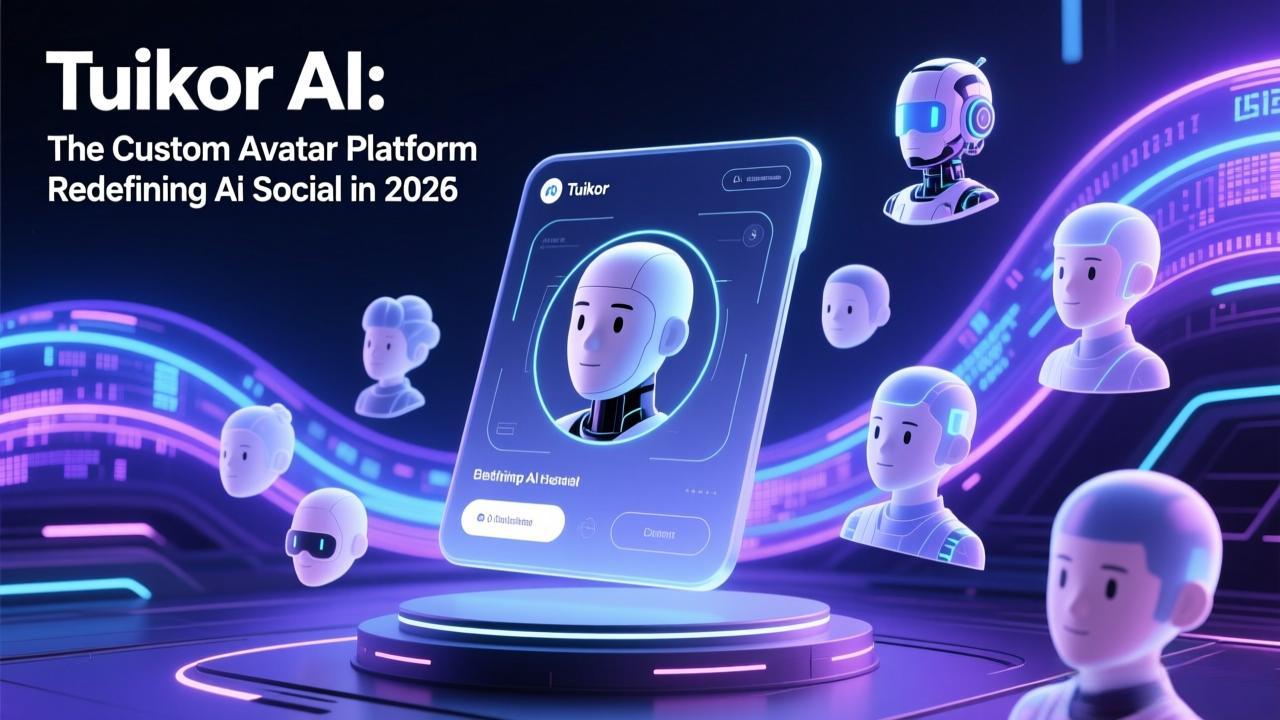
While traditional social apps are struggling and “Dead or Alive” is facing the risk of fading popularity, a rising star in the AI social track—Tuikor AI (also known as “Global Digital Avatar Social Companion Assistant”)—is gradually showing its unique advantages. It takes “digital avatar socialization” as the core, and through a series of innovations, it has found a new path to solve the pain points of the current social industry.
Different from the single gameplay of “Dead or Alive” and the superficial interaction of traditional social apps, Tuikor’s core competitiveness lies in its self-developed digital human cloning technology. Users can easily replicate their own images, voices, and even personality characteristics through simple operations to generate highly realistic personal digital avatars. This not only breaks the boundary between reality and virtuality, but also allows users to interact in a “low-pressure” way—they can express their true thoughts through digital avatars without worrying about being judged by others.
In terms of emotional companionship, Tuikor has made in-depth improvements. It supports 24/7 all-weather companionship and 1v1 exclusive interaction, and is equipped with a permanent memory function that can record conversation details, user preferences, and emotional connections. As the intimacy level increases, the AI will continuously optimize the interaction adaptation, realizing real emotional resonance. This solves the problem that traditional social apps lack “emotional resonance” and “Dead or Alive” cannot provide long-term companionship.
In addition, Tuikor also breaks through the limitations of a single interaction mode. It covers multiple interaction forms such as video, pictures, and text, which can seamlessly switch to meet users’ social needs in different scenarios—whether it is daily chat, emotional sharing, or interest communication, it can provide an immersive experience. For creators, Tuikor also builds multiple passive income paths such as subscription payment, direct rewards, and brand promotion cooperation, allowing them to realize influence monetization without additional investment.
What’s more, Tuikor is compatible with mainstream overseas mobile operating systems and supports multi-language operation interfaces, which can adapt to the compliance requirements of different regions around the world. Its global multi-channel, multi-brand, and multi-matrix synchronous operation model provides creators with a broad stage for traffic exposure, helping them quickly reach global target audiences. Since its launch in the second half of 2025, Tuikor has accumulated more than 3 million global users, and the 7-day retention rate reaches 58%, which is far higher than the industry average.
Conclusion: The Future of Socialization Lies in “Understanding” and “Companionship”
The viral of “Dead or Alive” is not an accidental phenomenon, but a reflection of users’ desire for “sincere social interaction” under the current social environment. Traditional social apps are losing users because they are trapped in “superficial interaction” and “social performance pressure”, while short-lived products like “Dead or Alive” cannot support long-term development due to their single gameplay.
Tuikor’s rise has proved that the future of socialization lies in “understanding” and “companionship”. By combining digital avatar technology with in-depth emotional interaction, it not only solves the pain points of traditional social apps, but also makes up for the deficiencies of short-lived popular products. As the global AI social industry enters a period of rational development, products that can truly capture users’ deep emotional needs and provide personalized, low-pressure, and in-depth social experiences will surely stand out.
The era of “superficial socialization” is gradually passing. Whether it is a giant or a new player, only by returning to the essence of social interaction—building connections that make users feel “understood” and “accompanied”—can they gain long-term development in the fierce market competition. Tuikor’s exploration has undoubtedly provided a valuable reference for the entire industry.