jingzhang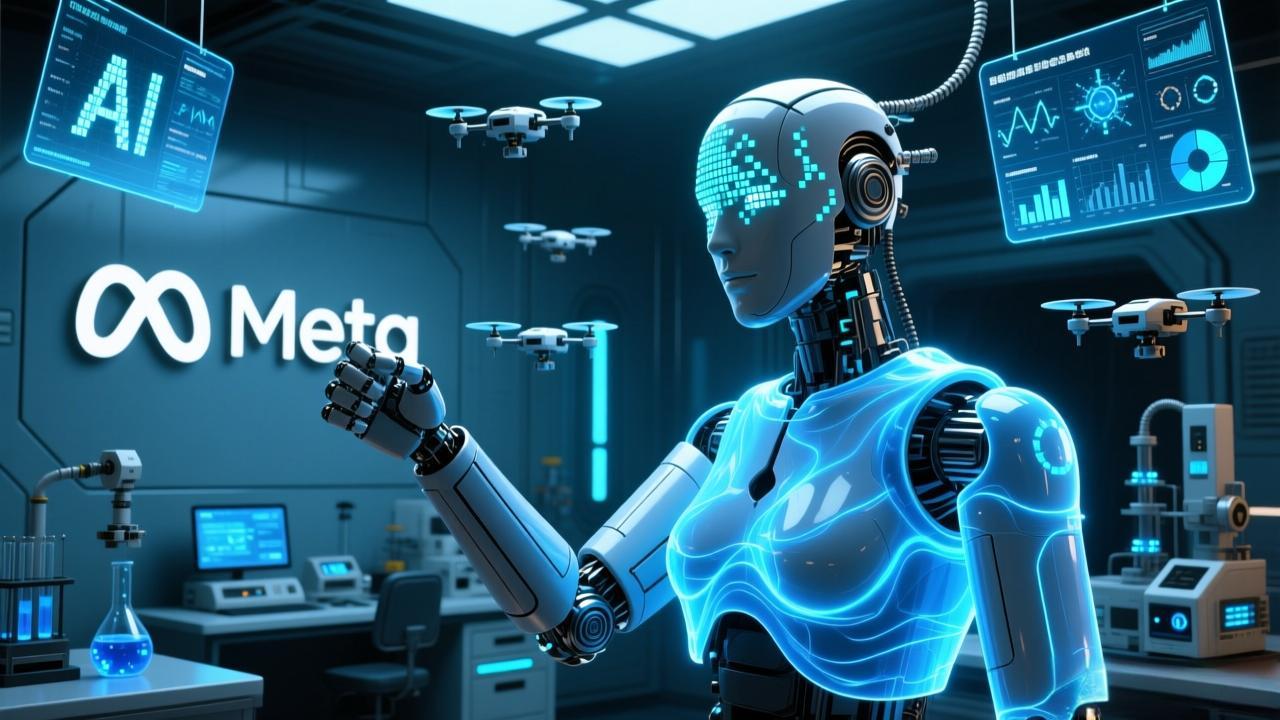
The recent $2 billion acquisition of Chinese AI startup Manus by Meta is far from an impulsive move. For over a decade, Meta has been shaping its technological territory and business ecosystem through strategic acquisitions. From social media to virtual reality, and now to AI agents, each acquisition reflects its forward-looking layout in the ever-evolving tech landscape. This article will take you through Meta’s acquisition journey, dissect the core value of Manus, and unravel the fierce competition and development trends in the global AI agent industry.
Meta’s Acquisition History: Building an Ecosystem Through Strategic Mergers
Meta, formerly known as Facebook, has long regarded acquisitions as a key driver of its growth. Its acquisition strategy can be roughly divided into three phases, each focusing on different core objectives to build a comprehensive tech empire.
The first phase centered on expanding the social media ecosystem. In 2012, Meta acquired Instagram for $1 billion, a deal that was widely questioned at the time but later proved to be a stroke of genius. This acquisition not only helped Meta fend off the threat of emerging photo-sharing platforms but also laid the foundation for its dominance in the mobile social space. In 2014, it spent $19 billion to acquire WhatsApp, securing a leading position in the global instant messaging market. As recently as November 2025, Meta won an antitrust lawsuit over these two acquisitions, with a federal judge ruling that the deals did not violate U.S. antitrust laws, affirming the legitimacy of its early ecosystem-building strategy.
The second phase shifted to exploring the metaverse and virtual reality (VR) frontier. In 2014, Meta acquired Oculus VR for $2 billion, marking its official entry into the VR field. This acquisition provided Meta with core technologies and teams for hardware devices, laying the groundwork for its later “metaverse” transformation. Over the years, Meta has continuously invested in and acquired multiple VR/AR-related startups, integrating hardware, software, and content to build a complete metaverse industrial chain.
The third phase, especially in recent years, has focused on seizing the AI commanding heights. In mid-2025, Meta acquired Scale AI for $15 billion, a startup known as the “invisible arms dealer” in the AI industry. Scale AI’s unique model combining human annotation, AI quality inspection, and synthetic data filled Meta’s gap in high-quality data supply, a crucial link in large model training. Just six months later, Meta acquired Manus, completing the layout of core technologies from AI infrastructure to terminal applications.
What’s noteworthy is that Meta’s acquisitions are not just about technology, but also about talent. When it acquired Scale AI, it brought in its 28-year-old founder Alexander Wang to lead the superintelligence project. Similarly, in the Manus acquisition, Meta retained the core R&D team led by founder Xiao Hong and appointed Xiao as vice president. This “acquisition-based recruitment” model allows Meta to quickly absorb top-tier teams that have been validated by the market, bypassing the inefficiencies of traditional talent recruitment.
Manus: The Crown Jewel in Meta’s AI Layout
Among Meta’s numerous acquisitions, Manus stands out for its unique value in the AI agent sector. Founded in 2022 by Xiao Hong, Manus was officially launched in March 2025 and quickly became an industry dark horse. As the world’s first general-purpose AI agent, it has created a disruptive product experience with its outstanding technical strength.
Manus’ core advantage lies in its Multiple Agent architecture, which enables it to operate independently in a virtual machine. Unlike traditional conversational AI that only provides answers, Manus can independently plan, call tools, execute complex tasks, and directly deliver complete results. It has demonstrated strong capabilities in both enterprise scenarios such as resume screening and stock analysis, and personal scenarios including travel planning and PPT creation. Its per-task cost is only one-tenth of the industry average, showing significant commercial potential.
Technically, Manus has achieved State-of-the-Art (SOTA) results in the authoritative GAIA benchmark test, with its complex task processing capability 23.7% higher than similar products from OpenAI. It also has the ability to process 147 trillion tokens on a large scale, which can quickly make up for Meta’s shortcomings in consumer and enterprise-level intelligent tools. For Meta, which is eager to compete with Microsoft and Google in the AI field, Manus is not only a technical supplement but also a key pawn to break the existing competitive pattern.
Before being acquired by Meta, Manus had already gained widespread recognition in the market. Just one month after its launch, it completed a $75 million Series B financing led by Benchmark, a top Silicon Valley venture capital firm, with a valuation soaring to nearly $500 million. By the time of the acquisition, its revenue had exceeded $100 million, and it had accumulated millions of users worldwide. Such impressive market performance further validated Manus’ commercial value and became an important reason for Meta’s high-price acquisition.
AI Agent Industry: From Concept to Capital Frenzy
Meta’s intensive acquisitions in the AI field are a microcosm of the global AI agent industry’s boom. 2025 is widely regarded as the “first year of AI agents,” with the industry shifting from a conceptual stage to large-scale commercial exploration.
The global AI agent market is showing explosive growth potential. According to market forecasts, the global market size will jump from $5.1 billion in 2024 to $47.1 billion in 2030, with a compound annual growth rate (CAGR) of 44.8%. In 2025 alone, there were 9 billion-dollar AI acquisition deals initiated by global tech giants, half of which focused on the AI agent sector. This capital frenzy stems from the disruptive value of AI agent technology to various industries.
If large language models (LLMs) are the “brain” of the AI era, then AI agents are “complete living organisms” capable of independent action. They can break down “data silos” within enterprises, enabling instant scheduling of 10-million-level orders; replace manual repetitive work, saving white-collar workers an average of 2.3 hours per day; and penetrate vertical fields such as healthcare, finance, and manufacturing, achieving upgrades like improved early cancer detection rates and doubled credit review efficiency.
The Chinese market is also a key battlefield in the global AI agent competition. By August 2025, a total of 538 generative AI services in China had completed filing, with a user scale of 515 million and a penetration rate of 36.5% by June. Major tech companies are actively deploying: ByteDance’s Doubao has exceeded 100 million daily active users through in-depth cooperation with mobile phone manufacturers; Tencent’s Yuanbao seamlessly integrates AI capabilities into the WeChat ecosystem; Alibaba’s Qianwen connects core business APIs to build an ecological intelligent hub. The State Council’s “Opinions on Further Implementing the ‘AI+’ Action” clearly states that the penetration rate of agent applications should exceed 70% by 2027, providing strong policy support for the development of the industry.
However, the AI agent industry also faces many challenges. Technically, some products still rely on third-party LLMs, with shortcomings in long-context processing capabilities, and virtual machine security vulnerabilities need to be addressed. Commercially, the marginal cost advantage in some scenarios is not obvious, and large-scale implementation is still difficult. Ethically, issues such as liability definition and data security brought about by AI’s independent decision-making require the industry to establish unified standards.
Conclusion: The New Pattern of Global AI Competition
Meta’s acquisition of Manus is a landmark event in the global AI agent industry, marking that the competition in this field has entered a white-hot stage. From social media to the metaverse, and then to AI agents, Meta’s acquisition journey reflects its consistent strategy of seizing the commanding heights of technology through capital.
For the AI agent industry, the influx of capital and the participation of tech giants will accelerate technological innovation and commercialization. In the future, the competition will no longer be a single technical contest but a comprehensive battle of ecosystems. Only those enterprises that can master core technologies, accumulate high-quality data, and have rich application scenarios can stand out in the fierce competition.
The acquisition of Manus by Meta also proves that Chinese AI teams have gained global recognition in core technical fields. As AI knows no borders, Chinese AI startups will face broader development opportunities on the international stage. The AI agent era has arrived, and it will not only reshape the competitive pattern of the tech industry but also profoundly change our work and lifestyle.
「Today’s Interaction」Do you think Meta’s acquisition of Manus will change the balance of power in the global AI industry? Welcome to share your views in the comments!
This article is an original work by Tech Insight. Reproduction is permitted only with authorization.
▼ Follow us to grasp the latest trends in the tech industry