jingzhang
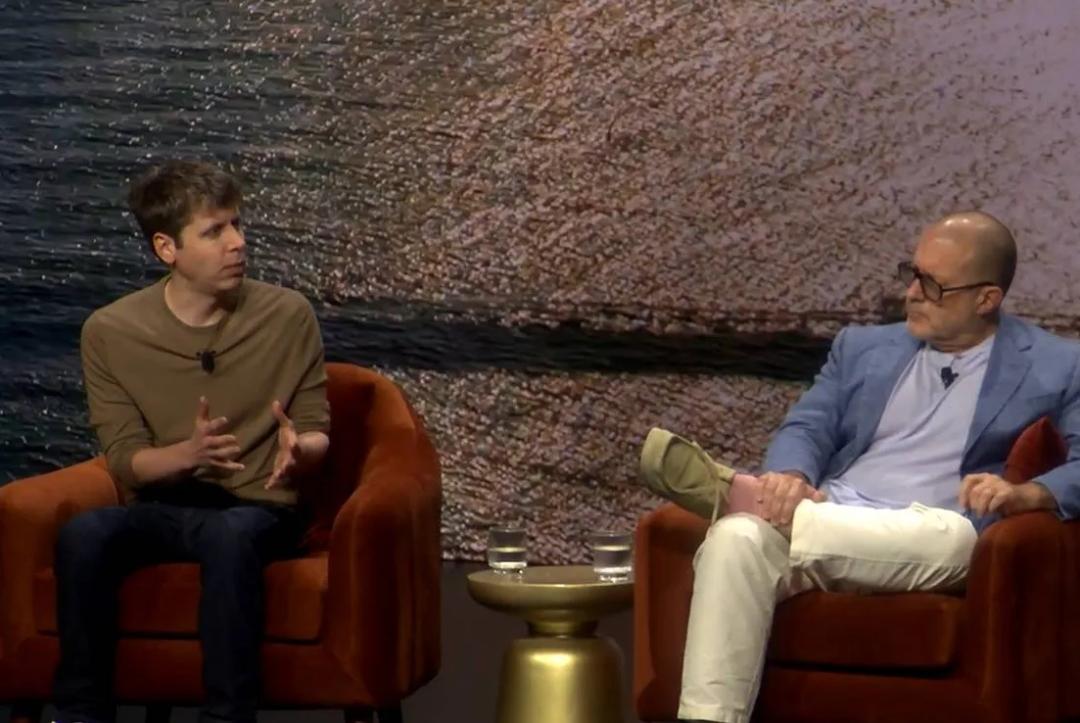
On November 21, OpenAI co-founder and CEO Sam Altman and Jony Ive, former Chief Design Officer at Apple and co-founder of the AI hardware startup io, conducted a 32-minute interview. During the conversation, the two revealed that OpenAI has developed its first batch of AI hardware prototypes, and that the product is expected to launch within the next two years.
In the interview, Ive outlined the design philosophy behind the device: it must be aesthetically pleasing, sleek, and non-intimidating, while also being easy to use. He expressed a preference for intensely intelligent, refined products with simple solutions. Ive also mentioned that he is particularly interested in experimenting with ceramic — a material that originates from China.
Altman commented that the fragmented user experiences on devices like the iPhone — including notifications, pop-ups, and alert sounds — continuously erode people’s ability to focus. In contrast, the device envisioned by OpenAI and io is designed to change that dynamic. It will have a deep understanding of the user’s life context, take over tasks for extended periods, filter out irrelevant information, and deliver what’s important at the right moment. One prototype version from io is described as so clean and elegant that it’s “lickable” — a term famously used by Steve Jobs to describe the original iPhone.
According to a report by MacRumors on November 24, the device being developed by io is an AI-focused mobile device without a screen. It aims to become the third core device in users’ lives, following the iPhone and MacBook. The gadget is compact and portable, small enough to fit in a pocket or sit on a desk — roughly the size of an iPod Shuffle, and even wearable around the neck. It comes equipped with a microphone and camera, enabling it to perceive and respond to the user’s life context.
Back in May 2024, OpenAI announced its $6.5 billion acquisition of io, the AI hardware startup founded by Ive. At the time, it was OpenAI’s largest acquisition to date. Following the acquisition, OpenAI announced plans to develop a mysterious new AI device — which is now coming to light as this upcoming hardware product.
How to interpret the development beyond the headline
Fast-moving technology and crypto stories should separate confirmed facts from forecasts, market reaction and interpretation. Product launch, adoption, liquidity, regulation and execution can all determine whether an early headline becomes a durable shift.
The useful follow-up is concrete evidence: shipped capability, user growth, audited transactions, financial guidance or regulatory decisions that confirm or weaken the initial narrative.
Watch second-order effects
Major developments can change incentives for developers, creators, exchanges, infrastructure providers and users. The practical impact may appear through costs, standards, distribution or policy rather than through the headline event itself.
Keeping long-term scenarios conditional makes later updates easier to interpret without rewriting early speculation as fact.
Separate market sentiment from product execution
Price movement and social attention can react instantly, while technology deployment takes longer. A useful analysis asks what operational milestone would prove that the story has changed real behavior.
That milestone might be production use, a measurable cost change, a regulatory approval or sustained customer demand rather than one day of market volatility.
Identify the assumptions behind the forecast
Every long-term scenario depends on assumptions about adoption, competition, capacity and policy. Making those assumptions explicit helps readers understand what evidence would cause the outlook to improve or weaken.
Practical implementation check
Before adopting the mechanism described above, define the exact business rule, who controls it and what evidence will show that it worked. Test the failure path as carefully as the successful path, especially when rights, payments or wallet actions are involved.
The final system should also document versioning, rollback and the assumptions that may become stale over time. That turns a one-off experiment into an operating model that creators, users and developers can understand.


 admin