jingzhang
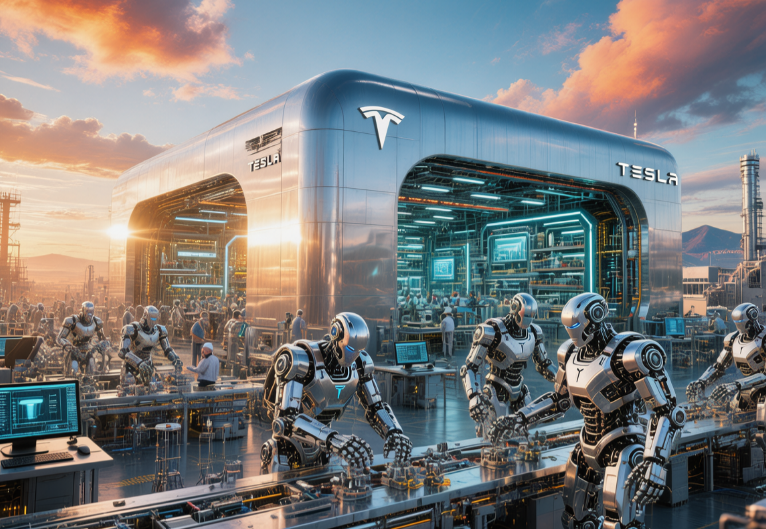
Austin, Texas — Tesla is preparing to expand its Gigafactory Texas once again, with CEO Elon Musk revealing plans to build a dedicated facility at the site to produce 10 million units of its Optimus humanoid robot per year.
Currently, Tesla aims to begin mass production of the Optimus robot in 2027, though the timeline remains subject to development progress.
Musk did not specify when the new factory expansion would be completed, but the ambitious production target suggests a significant ramp-up in investment and hiring at the Texas facility.
The Optimus project, first unveiled in 2022, is designed to eventually automate repetitive or dangerous tasks in factories and homes. While early prototypes have demonstrated basic mobility and dexterity, full-scale production has yet to begin.
Tesla’s Gigafactory Texas, located near Austin, is already one of the company’s largest manufacturing hubs, producing Model Y electric vehicles and 4680 battery cells. The potential addition of a dedicated Optimus plant would mark a major expansion beyond automotive production.
Musk has previously stated that Optimus could eventually become more valuable than Tesla’s car business, emphasizing its long-term potential in industries such as manufacturing, logistics, and healthcare.
However, skeptics have questioned whether Tesla can meet its aggressive timelines, given the technical challenges of building reliable humanoid robots at scale.
The expansion comes as Tesla faces increasing competition in EVs and AI-driven automation, with rivals like BYD, Apple (in robotics R&D), and various startups also advancing in the space.
Tesla has not yet confirmed an official timeline or investment figure for the new Optimus facility, but industry observers expect further announcements in the coming months.
Separate market sentiment from product execution
Price movement and social attention can react instantly, while technology deployment takes longer. A useful analysis asks what operational milestone would prove that the story has changed real behavior.
That milestone might be production use, a measurable cost change, a regulatory approval or sustained customer demand rather than one day of market volatility.
Identify the assumptions behind the forecast
Every long-term scenario depends on assumptions about adoption, competition, capacity and policy. Making those assumptions explicit helps readers understand what evidence would cause the outlook to improve or weaken.
How to interpret the development beyond the headline
Fast-moving technology and crypto stories should separate confirmed facts from forecasts, market reaction and interpretation. Product launch, adoption, liquidity, regulation and execution can all determine whether an early headline becomes a durable shift.
The useful follow-up is concrete evidence: shipped capability, user growth, audited transactions, financial guidance or regulatory decisions that confirm or weaken the initial narrative.
Watch second-order effects
Major developments can change incentives for developers, creators, exchanges, infrastructure providers and users. The practical impact may appear through costs, standards, distribution or policy rather than through the headline event itself.
Keeping long-term scenarios conditional makes later updates easier to interpret without rewriting early speculation as fact.
Practical implementation check
Before adopting the mechanism described above, define the exact business rule, who controls it and what evidence will show that it worked. Test the failure path as carefully as the successful path, especially when rights, payments or wallet actions are involved.
The final system should also document versioning, rollback and the assumptions that may become stale over time. That turns a one-off experiment into an operating model that creators, users and developers can understand.


 admin