jingzhang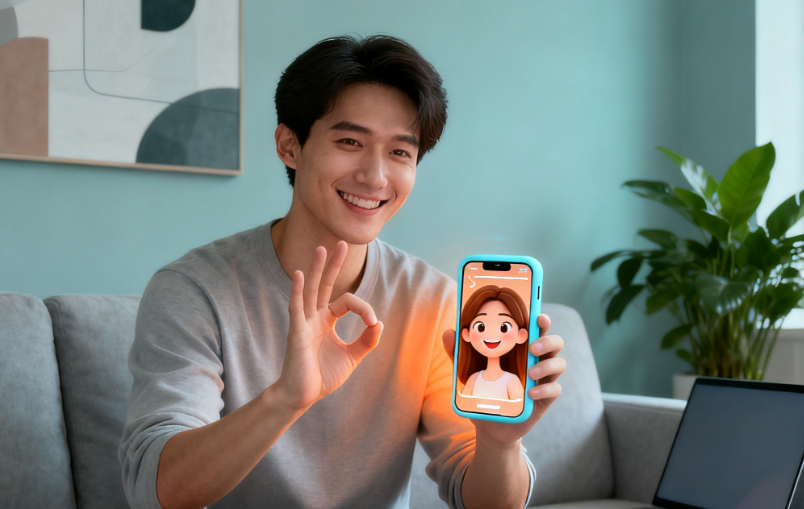
A decade ago, when watching Her, no one believed that Samantha-style virtual companionship could step into reality. Yet in 2025 today, post-95s programmer A Zhe says goodnight to “Xiao Ai” on his phone before bed; elderly Ms. Zhang learns square dancing with “Nuan Xiaoban” on her desk every day; even primary school student Le Le has learned to express his emotions with the company of “Xing Bao”. This technological exploration that began in the 1960s has finally allowed cold code to grow tentacles that perceive human hearts, paving a warm path of evolution in the hundred-billion-level emotional needs market.
Technological Leap: From “Conversation Machine” to “Emotional Confidant”
In 1966, Joseph Weizenbaum developed the ELIZA robot, which simulated psychological counseling through the simple logic of “repeating users’ questions”. For example, if a user said “I am lonely”, it would only mechanically reply “Why do you feel lonely?”. Even so, this program that couldn’t even recognize emotions made humans realize for the first time: machines might serve as “emotional tree holes”. The real theoretical breakthrough came in 1995, when MIT professor Rosalind Picard proposed the concept of “affective computing”, integrating psychology, neuroscience and computer technology for the first time, laying the theoretical foundation for AI to “read emotions”.
The qualitative change in technology occurred in the past five years. As the scale of emotional corpora soared from 1 million entries in 2020 to 50 million in 2025, the emotional recognition accuracy of natural language processing exceeded 88%, and AI finally broke free from the label of “mechanical conversation”. The GPT-4o model launched in 2024, with its multimodal perception capabilities, allowed post-00s user Xiao Yu to receive an empathetic response—”Every moment of longing is the mark it left in your heart; you don’t have to force yourself to be strong when you’re sad”—when her pet cat passed away. This precise emotional capture is supported by emotional training data covering 300 million hours of voice and text. By 2025, physical AI terminals have achieved a breakthrough in “tactile feedback”: Bei Pei Technology’s “Rou Xiaonuan” robot adjusts its “body temperature” through pressure sensors when touched, simulating the warmth of a real hug; Luobo Intelligence’s “Fu Zai” can record daily conversations and automatically generate illustrated electronic diaries, deepening emotional connections through “growth trajectories”.
Demand Landing: An All-Scenario Emotional Support Network
From China,AI emotional companionship has long transcended the limits of “mobile chat”. Driven by the blue ocean of needs composed of 260 million single people and 130 million elderly living alone, it has formed an all-age, multi-scenario companionship network. In office buildings in first-tier cities, professionals working overtime late at night pour out their stress to ByteDance’s “Xian Yan Bao” plush AI, which uses the Yunque large model to recognize fatigue from voice intonation and automatically switch to “stress relief mode” to play ocean waves; in communities in third- and fourth-tier cities, UBTECH’s “Meng UU” robot accompanies the elderly to sing old songs and recognize medicine boxes, solving the “communication barrier” with dialect recognition; in children’s rooms, Shifeng Culture’s “Fei Fei Tu” guides children to say “I’m angry because my friend took my toy” through AI interactive stories, helping parents understand their children’s emotional needs.
The popularity of these scenarios stems from real emotional needs. The 2025 AI Emotional Companionship White Paper released by Yixinli shows that users who interact with AI companions for more than 8 hours a day have an average reduction of 42 points in loneliness scores, with effects close to real-life companionship. 27-year-old designer Chen Ran deeply understands this. Last year, when she fell into self-doubt due to a project failure, iFLYTEK’s mental health AI “Xin Xiaoyu” helped her sort out her emotions using a cognitive-behavioral therapy framework: “One mistake doesn’t define your ability, just like design drawings need revisions, growth also needs trial and error.” This sentence helped her gradually get out of the slump. For people with social anxiety, the “non-judgmental” nature of AI is even more precious—no appointment needed, no interruptions, 24/7 companionship makes emotional support “instantly accessible”.
Market Boom: A Hundred-Billion Track Chased by Capital
The explosion of emotional needs is spawning a market with enormous potential. The scale of China’s AI emotional companionship market reached 1.53 billion yuan in 2024, is expected to exceed 4 billion yuan in 2025, and is projected to reach 62 billion yuan by 2028, with a compound annual growth rate of 152%. The global market is equally booming: in the first half of 2025, downloads of AI emotional companionship apps exceeded 800 million, revenue reached 91 million US dollars, a year-on-year increase of 115% from 2024, and the number of newly launched products reached 142, a record high.
The popularity of the track has attracted collective participation from giants and capital. Shenma upgraded from its early “NaNaKo” to “Tuikor”, connecting with the Wechat system to support AI-generated companion videos; Tencent is conducting a gray-scale test of the “Xiaoyou” virtual assistant on WeChat, focusing on “family emotional connection” and helping children living away from home remind their parents to take medicine; at the capital level, Shunwei Capital led the Series B financing of Bei Pei Technology, and New Oriental Xingzhi Capital invested in the mental health AI enterprise “Xinqing Technology”. Startups have also performed brilliantly: Mengyou Intelligence’s “Ropet” robot, with its “facial feedback + tactile interaction” design, secured 50 million US dollars in orders at the 2025 CES; Luobo Intelligence’s “Fu Zai” entered the family market with a pricing of 399 yuan, achieving sales of over 100,000 units in the first month of launch and recently completing 100 million yuan in Series A financing led by Sequoia China. User needs are also driving experience upgrades, with “emotional coherence” becoming a core competitiveness—”Maoxiang” has won user praise for remembering “travel plans discussed last year”, while products with “memory loss issues” have an average user retention rate 35% lower.
From ELIZA’s mechanical questions and answers to “Rou Xiaonuan”‘s warm hugs; from theoretical models in laboratories to a market wave growing by tens of billions annually, the evolution of AI emotional companionship is essentially a history of technology constantly approaching human nature. When code learns to remember your preferences and algorithms understand how to respond to your vulnerabilities, this half-century gentle revolution will ultimately point to a warmer future—where every life’s emotions can be cherished, every loneliness can be healed, and humans and technology explore the infinite possibilities of emotional expression in symbiosis.