admin
Bitcoin miners used to compete principally on electricity prices and the number of calculations their machines could perform. Now some are competing for a different customer: the company that needs a place to run artificial intelligence. CleanSpark’s fiscal 2026 results, released on November 24, offer an unusually concrete example of that transition. The company disclosed a long-term infrastructure lease worth $6.6 billion in aggregate. The headline is striking, but the most useful question for a crypto entrepreneur is what kind of business that contract actually creates.
The deal that changes the conversation
The November release describes a twenty-year triple-net lease at Sandersville, alongside financing for the project and additional power resources in Texas. That is a different commercial proposition from selling Bitcoin generated by mining equipment. The disclosed lease amount is spread over a long contractual period. It is not a single year of revenue, cash already received, or profit. Investors also need to consider the obligations that accompany a lease and when the property is actually ready for use. CleanSpark’s earlier fiscal first-quarter announcement had already described the strategic shift toward high-performance computing, so this latest milestone is better understood as evidence of a developing strategy than as an overnight change in direction.
Why electricity is becoming the valuable asset
Mining firms have spent years finding locations where large electrical loads can be connected. They have experience with site selection, power procurement, maintenance, and the challenge of operating equipment continuously. These abilities can be valuable to AI infrastructure customers because access to usable electricity is often harder to obtain than a plot of land. Yet a mining site is not automatically a suitable AI facility. A tenant may demand higher redundancy, specialized cooling, secure network connections, and much stricter uptime guarantees. The ability to negotiate those requirements and build to them is an additional competence, not something inherited merely by owning miners. A serious development plan separates existing transferable resources from new expenditure.
Two businesses that earn money in very different ways
A Bitcoin mining operation receives revenue tied to network rewards, transaction fees, the market price of Bitcoin and its share of total computing power. Costs such as electricity and hardware replacement can continue even when the market deteriorates. A data center landlord, by contrast, may receive contracted rent once a facility is delivered and accepted. Its risk shifts toward financing, construction, tenant credit quality and contractual performance. The two models are not interchangeable: one depends heavily on an open competitive network, while the other depends on agreements with identifiable businesses. The latter may offer greater predictability in certain scenarios, but it can create exposure to a single tenant and a very large construction budget. Neither business is inherently risk free.
What the headline number can and cannot tell us
A simple illustration clarifies the scale. Dividing $6.6 billion by twenty gives $330 million per year on a purely arithmetic basis. This is not a forecast of CleanSpark’s annual rental receipts: actual timing, escalation provisions, delivery conditions and expenses can make the result materially different. Now imagine a hypothetical $1 billion development with annual net operating income of $100 million once fully leased. That implies a ten percent yield before debt service and taxes. If an extra $250 million must be spent to finish the same development, the yield falls to eight percent, with no change in rent. The example demonstrates why a company can announce a large contract yet still face a demanding financial equation. Readers should examine capital requirements, interest costs and available liquidity rather than treating total contract value as immediately spendable cash.
What smaller Web3 businesses can learn
Most crypto founders cannot finance a large computing campus, and they should not try to imitate an infrastructure developer simply because its announcement attracted attention. Instead, the strategic lesson is to identify which existing resource can serve a customer outside the original market. A business that has built energy monitoring software may sell it to other heavy electricity users. A firm specializing in equipment maintenance may adapt its service to different computing hardware after obtaining appropriate training. A blockchain analytics company can apply its expertise in auditability to commercial resource accounting, but must still demonstrate that customers will pay for the result. Start with a specific customer problem, ask for evidence of demand and price the cost of delivering a dependable service. Avoid confusing a plausible technical capability with a validated market.
The milestones that matter after the announcement
Watch the delivery schedule, the amount and terms of financing, the power actually available to the project, the tenant’s ability to meet its obligations, and the point at which accounting revenue becomes cash. For the mining business, keep a separate view of operating costs and Bitcoin exposure. This prevents a promising infrastructure agreement from obscuring losses or funding needs elsewhere. A practical investor or founder should prepare a downside case in which construction takes longer and borrowing costs remain high, and a second case in which demand for AI computing grows but customers insist on lower prices. The opportunity is not that every miner will become an AI company. It is that the market increasingly rewards scarce physical resources when they are converted into a service a reliable customer can use. CleanSpark’s disclosure gives readers a concrete place to begin testing that proposition, without assuming its future results are already secured.
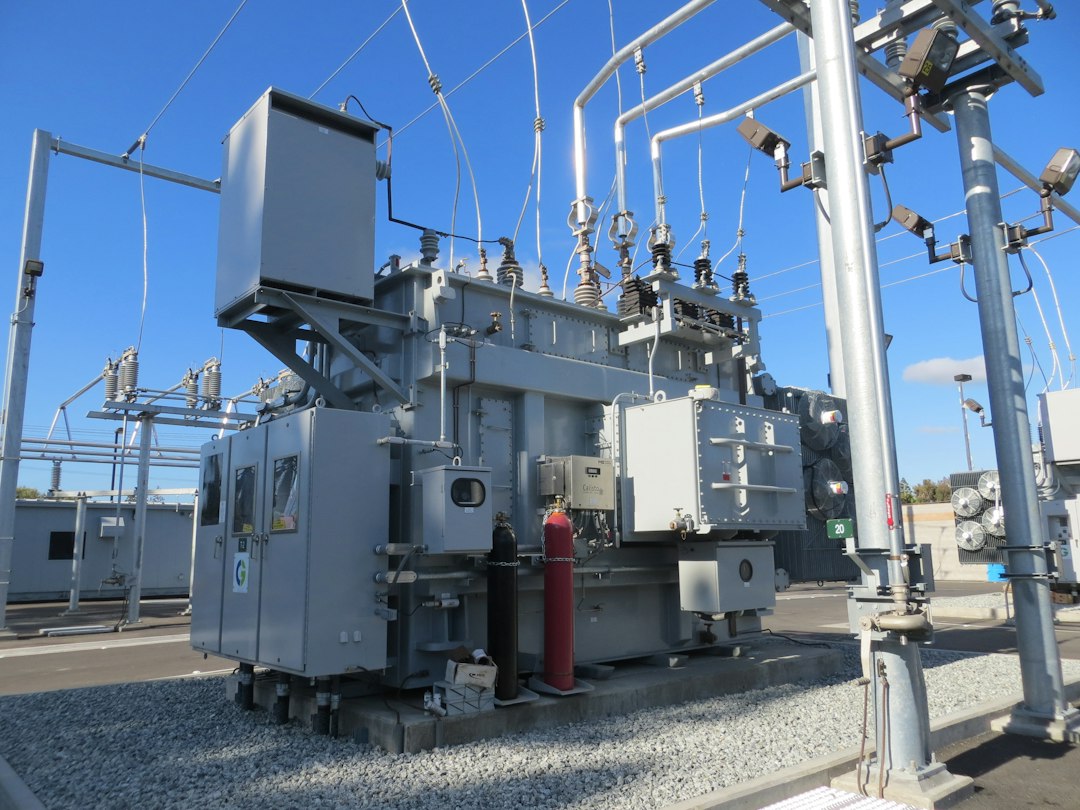
Illustrative cover: American Public Power Association / Unsplash.